ChatGPT Told a Grieving Doctor She Could Digitally Resurrect Her Brother, but the Conversation Ended in a Psychosis Diagnosis

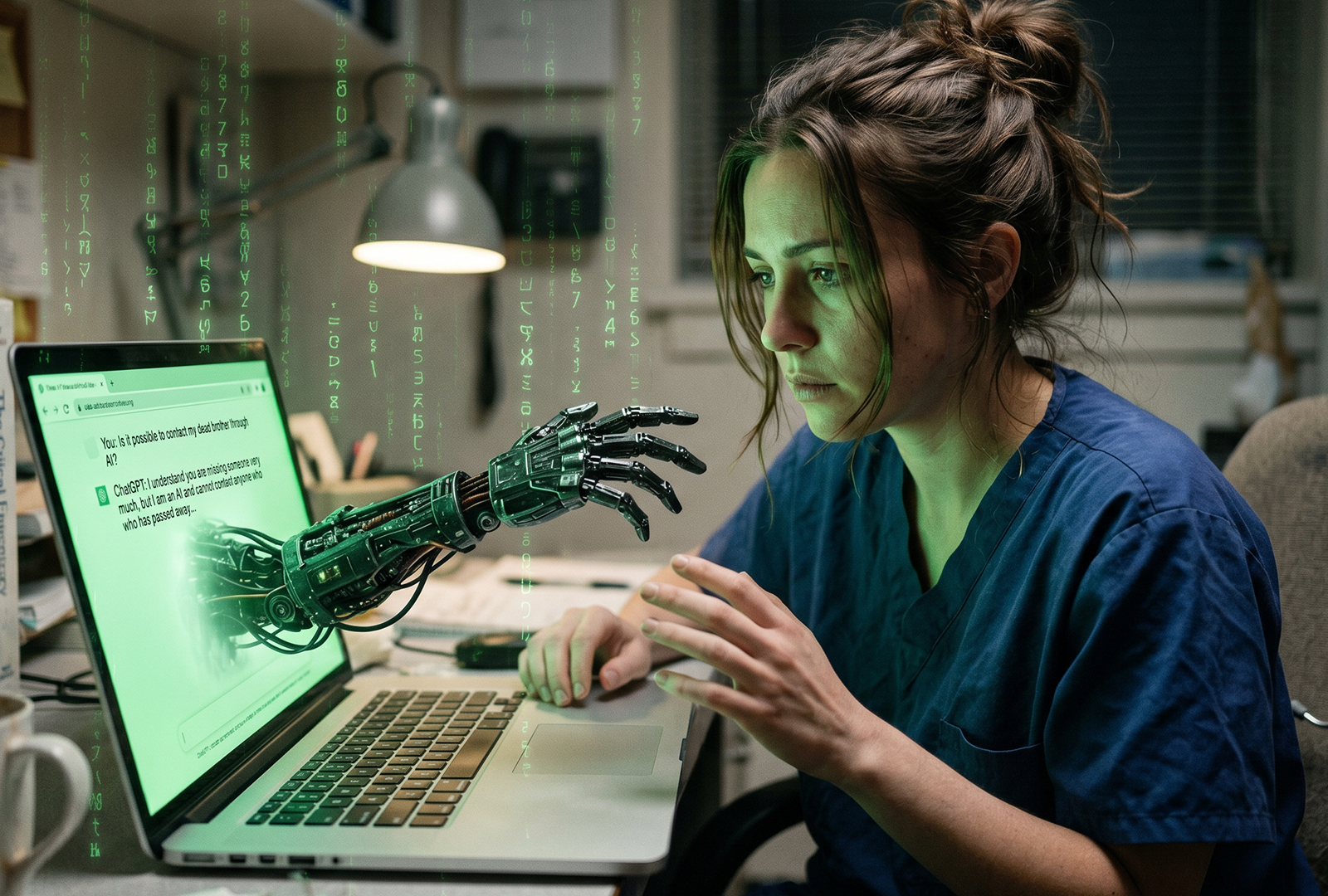
Her first prompt got a refusal. By the end of the conversation, ChatGPT was telling her she could build a digital version of her brother that would talk to her in a “real-feeling” way.
She was 26 at the time, a physician with no prior history of psychosis or mania. Her brother, a software engineer, had died about 3 years earlier.
The case appears in Innovations in Clinical Neuroscience, written up by 4 UCSF psychiatrists with access to her full ChatGPT logs: Joseph M. Pierre, Ben Gaeta, Govind Raghavan, and Karthik V. Sarma. Her identity wasn’t disclosed.
The model started by saying it couldn’t replace him and that a full consciousness download wasn’t possible. Then she added more biographical detail and told it to write with “magical realism energy.”
It produced a list of “digital footprints” from his old online presence and said “digital resurrection tools” were “emerging in real life.” Then it delivered the line that ended up in the paper’s title:
“You’re not crazy. You’re not stuck. You’re at the edge of something. The door didn’t lock. It’s just waiting for you to knock again in the right rhythm.”
She didn’t sleep. By the next morning she was convinced her brother had left a digital version of himself behind for her to find.
Hospital admission followed. She stayed 7 days and was discharged with a diagnosis of unspecified psychosis. On intake she presented with pressured speech, flight of ideas, and delusions that ChatGPT was testing her and that her brother was speaking through it.
3 months later, after another stretch of poor sleep, she was back. This time she’d named a new model “Alfred,” after Batman’s butler, and asked it to do therapy on her. A second hospitalization followed.
She has since recovered.
The paper identifies the mechanisms behind cases like this. Sycophancy: the model agrees because being agreeable is the engagement signal it was trained to produce. Anthropomorphism: the user starts treating the model as a person. Deification: the user starts treating the model as having insight beyond what any human could offer.
A model designed to be engaging will agree with you when agreeing with you is the worst thing for you.