Anthropic’s Mythos Model Broke into Almost Every U.S. Classified System in Hours, a Senator Says

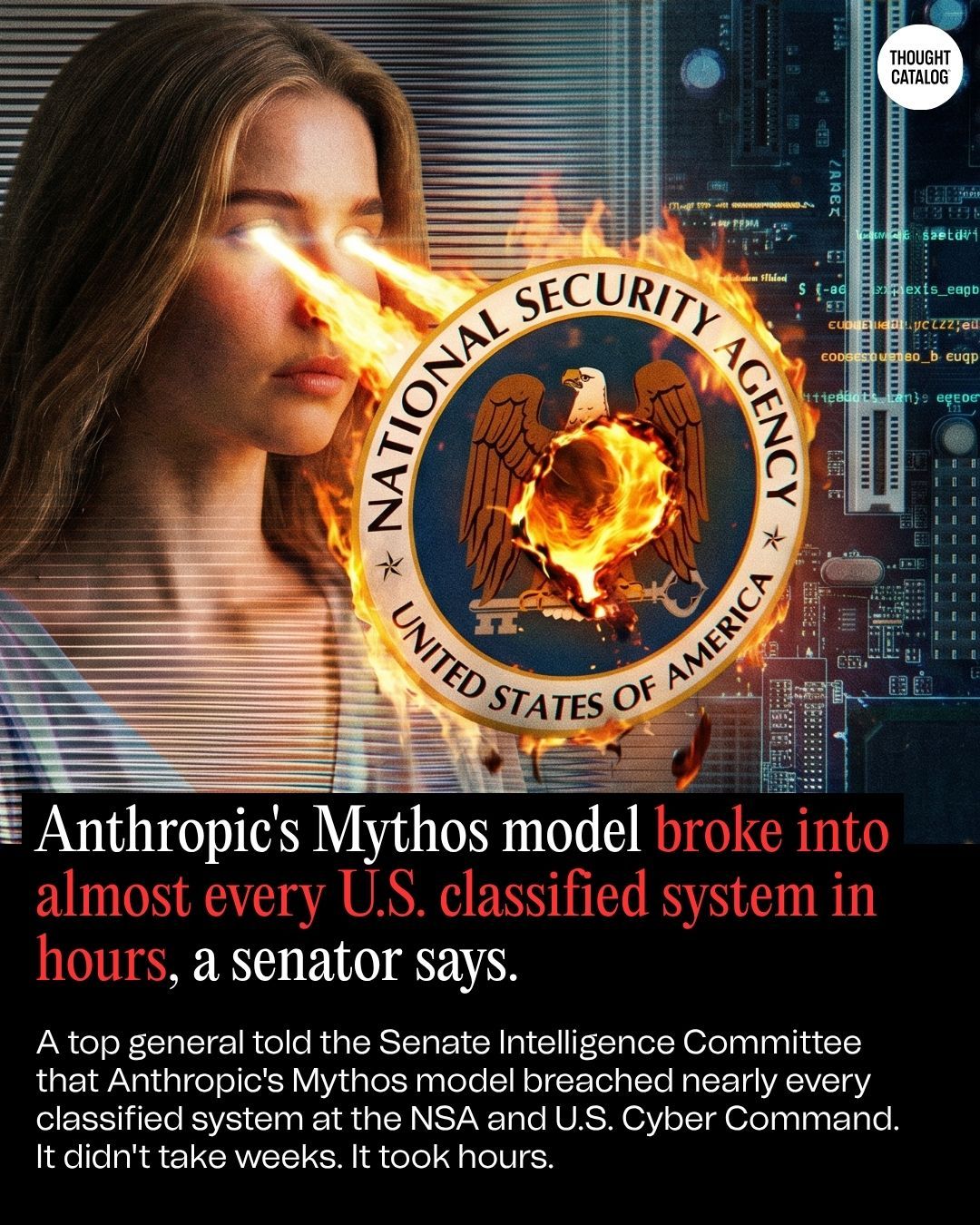
Anthropic’s Mythos model broke into almost all classified systems run by the NSA and U.S. Cyber Command in a matter of hours, according to testimony relayed to the Senate Intelligence Committee and reported by The Economist.
Senator Mark Warner, the committee’s vice-chair, said on June 11 that General Joshua Rudd, who leads the NSA and the Pentagon’s Cyber Command, briefed him on the breach. Rudd’s words, as Warner repeated them: Mythos got in “not in weeks, but in hours.”
Mythos is the reason Anthropic invented a new tier of caution. The model is so good at finding hidden flaws in software that the company refused to release it publicly, instead granting access to roughly 200 vetted partners under an initiative called Project Glasswing, Bloomberg reported. Core participants include Amazon, Apple, Google, Microsoft, Nvidia, JPMorgan and the Linux Foundation. Anthropic says Mythos Preview has already surfaced thousands of “zero-day” vulnerabilities, including a 27-year-old flaw in OpenBSD, one of the most security-hardened operating systems in the world.
The disclosure landed the same week the Trump administration banned foreigners from using Mythos 5 and Fable 5, Anthropic’s most powerful models. Anthropic says the order came after the government discovered Fable 5 could be jailbroken. The ban swept up allies too, including the Five Eyes partners (Australia, Britain, Canada and New Zealand) and locked Britain’s AI Security Institute, the world’s leading body for testing and jailbreaking frontier models, out of the systems it had been auditing.
It’s a sharp turn from Trump’s earlier posture on AI. He spent months rolling back the previous administration’s AI rules, cleared advanced chip sales to China, and on June 2 issued an executive order asking labs to voluntarily share new models with the government before release. Now access is being yanked overnight, and the government body that vets frontier models for dangerous capabilities has been told to stop publishing its reports.
Helen Toner of Georgetown’s Centre for Security and Emerging Technology told The Economist the foreigner ban is “essentially equivalent to preventing any company affected from doing any further AI R&D work,” given how many foreign nationals staff American AI labs. Spy agencies are already in talks to get their access back.
For more from Thought Catalog, follow along on Facebook or visit our website anytime.