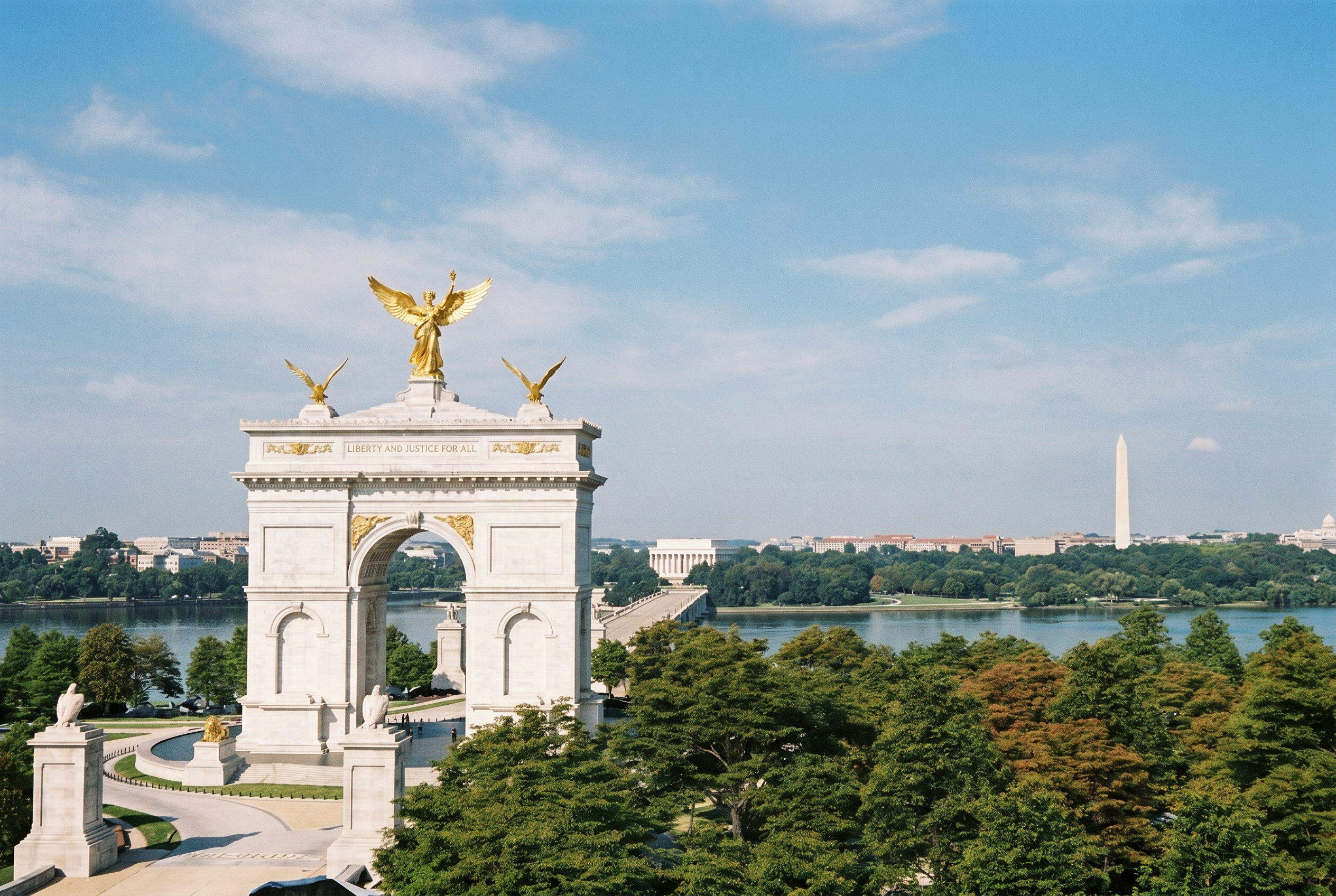
Trump’s Interior Department Now Says a Federal Height Law That’s Stood for 115 Years Doesn’t Apply to His 250-Foot Arch

The Height of Buildings Act of 1910 limits most structures in Washington, D.C., to roughly 130 feet, a rule rooted in early 20th-century fire safety concerns and a desire to preserve the city’s low, horizontal, neoclassical character, one dominated by monuments rather than modern skyscrapers.
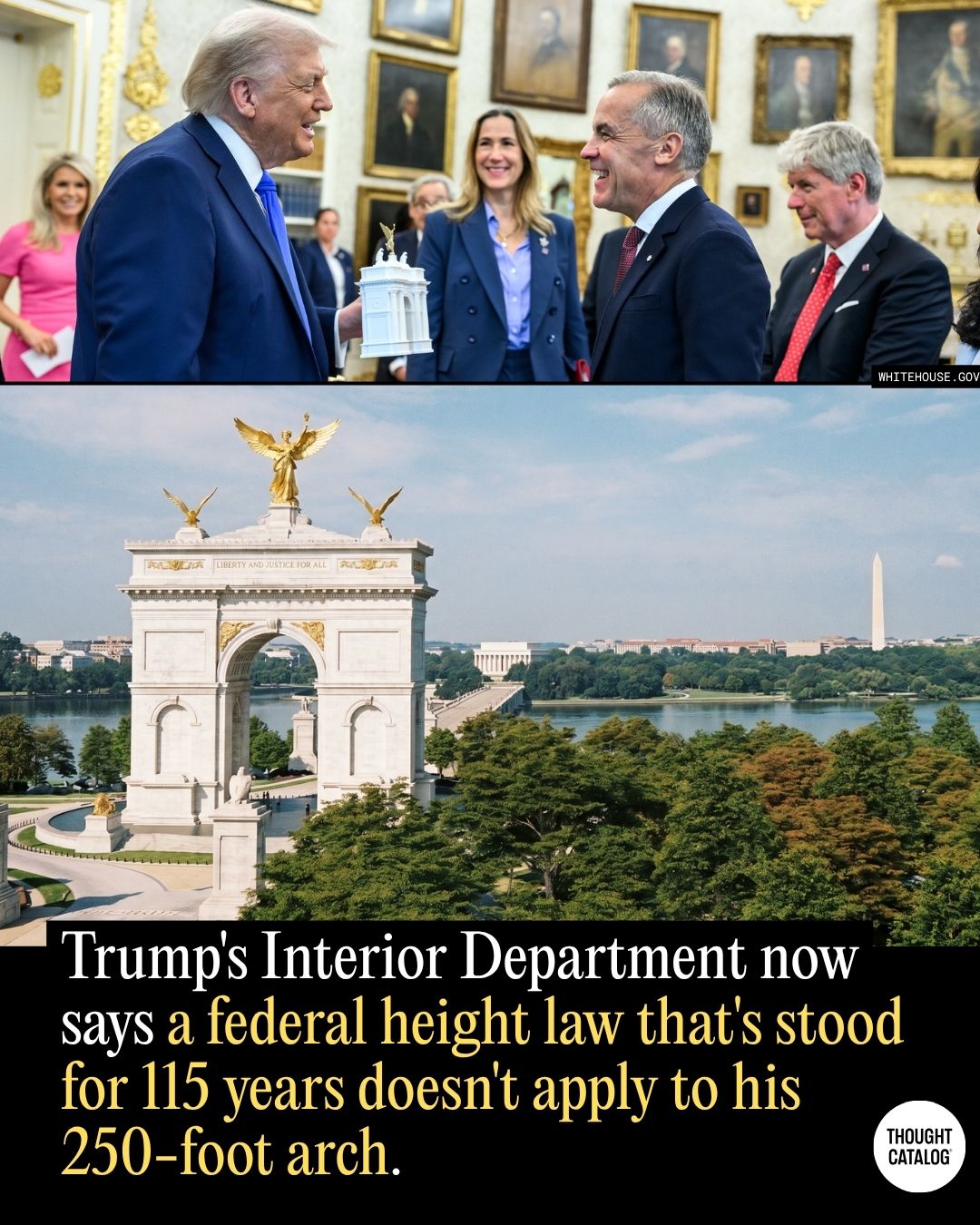
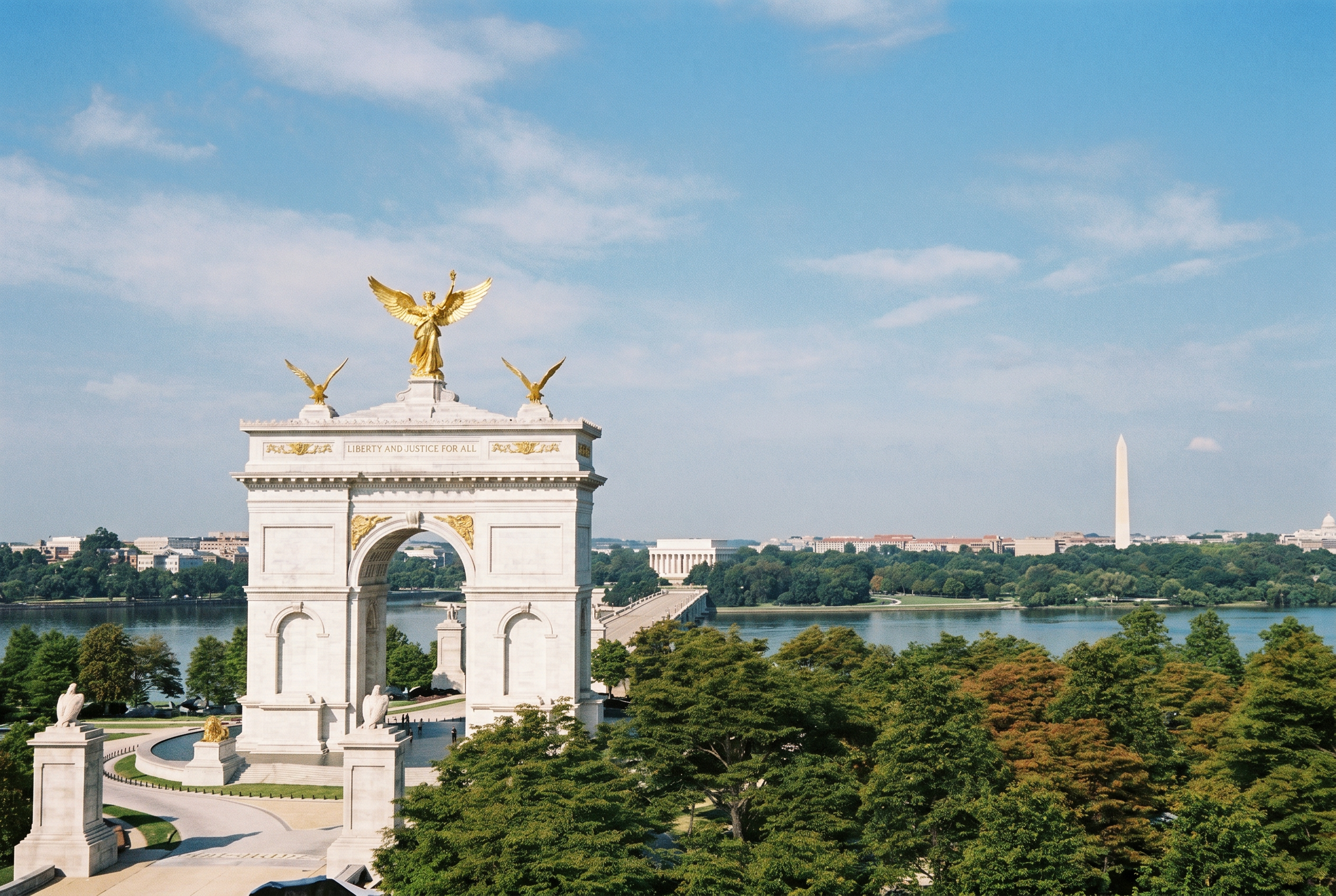
Trump’s proposed Independence Arch would stand 166 feet tall, with almost another 100 feet of gilded wing statuary on top. Designed by Harrison Design and modeled explicitly on the Arc de Triomphe, the marble and gold structure would feature two eagles and a large winged figure Trump says is Lady Liberty. One side would read “One Nation Under God.” The other would read “Liberty and Justice for All.” It’s intended as a ceremonial gateway at a traffic circle off the Arlington Memorial Bridge, directly across the Potomac from the Lincoln Memorial, as part of celebrations marking America’s 250th anniversary.
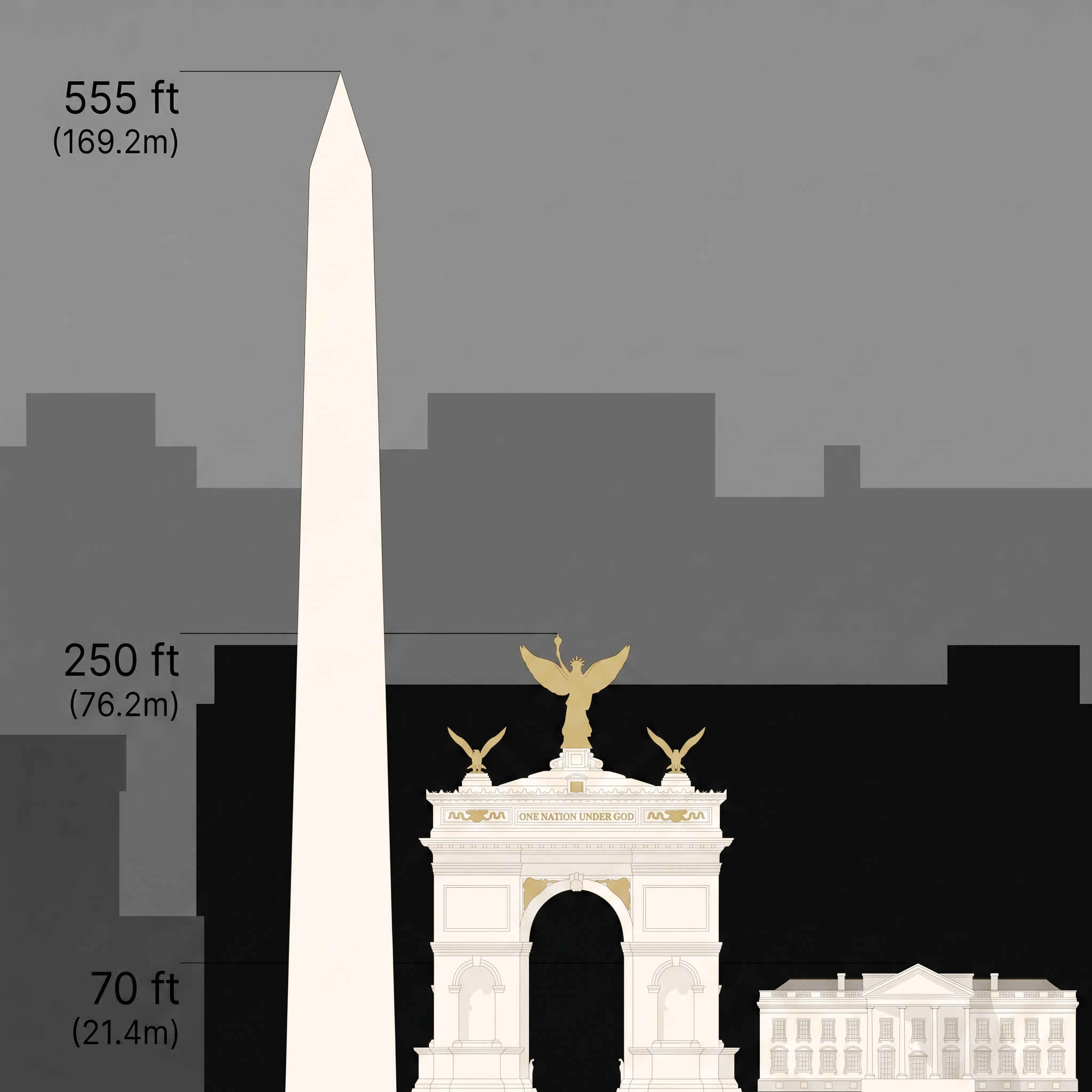
Because the arch is a freestanding monument rather than a habitable building, the Interior Department has argued in a recent unsigned memo that the 1910 Height Act, which it describes as functioning like a local zoning ordinance, doesn’t apply to federal projects on federal land. That interpretation breaks with the long-standing position of the Commission of Fine Arts and National Capital Planning Commission staff, who have historically applied the height limits to federal construction. The commission’s Trump-appointed chair, Will Scharf, asked Interior for the memo ahead of a final vote.
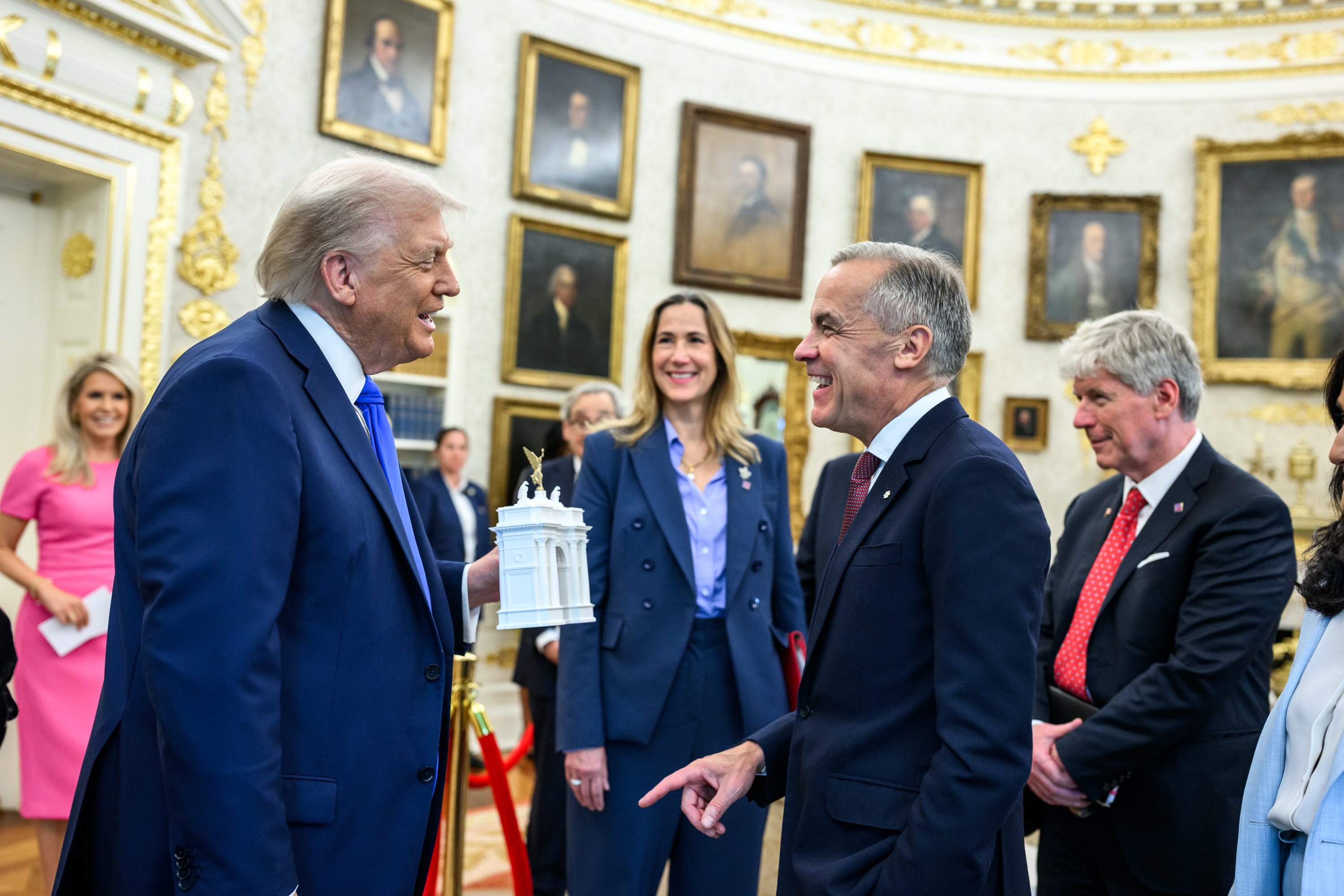
Trump first previewed models of the arch at a White House event last fall, telling donors he preferred the largest version. He’s said he doesn’t plan to seek congressional authorization for the project. A coalition of Vietnam War veterans has filed suit, arguing the structure would obstruct the historic sightline between the Lincoln Memorial and Arlington National Cemetery. Recent polling shows Americans oppose the project by more than 2-to-1.
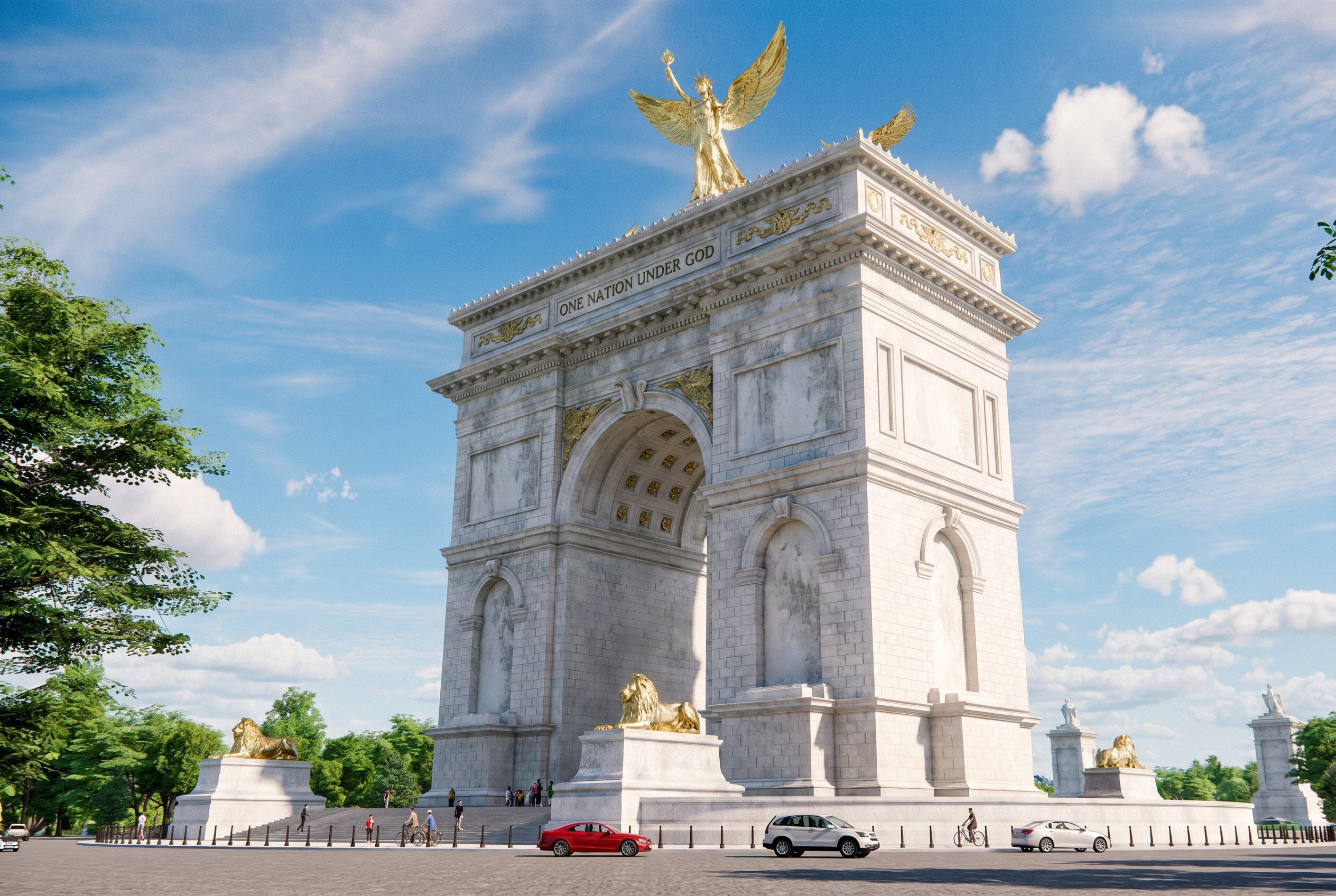
Supporters view the arch as a fitting classical monument that would elevate the western entrance to the capital in the same spirit Paris celebrates its own triumphal arch. Critics say it would disrupt carefully preserved historic views and test the limits of height restrictions that have shaped Washington’s skyline for more than a century.
The Commission of Fine Arts is expected to take further action on the design in the coming weeks.
Thanks for reading Thought Catalog. Show us some love on Facebook, and discover more on our website.