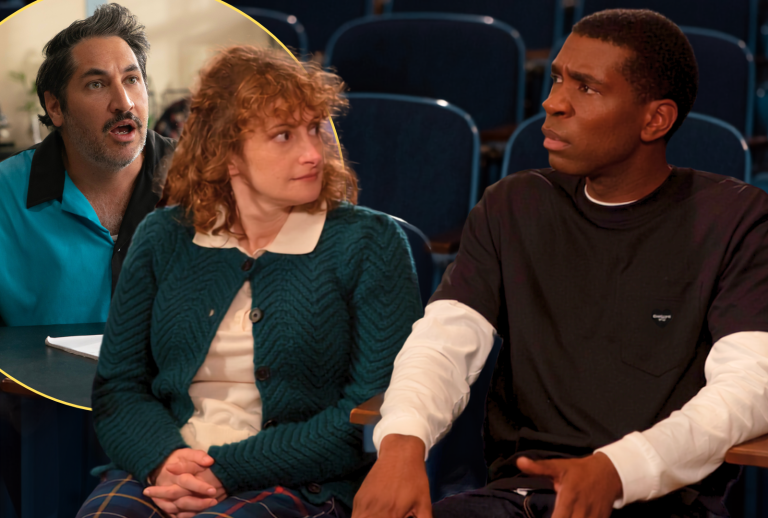
You Know Him From ‘Stranger Things’. John Reynolds Wrote And Stars In Hulu’s Latest Comedy That Sends The Class of 2008 Back To High School.

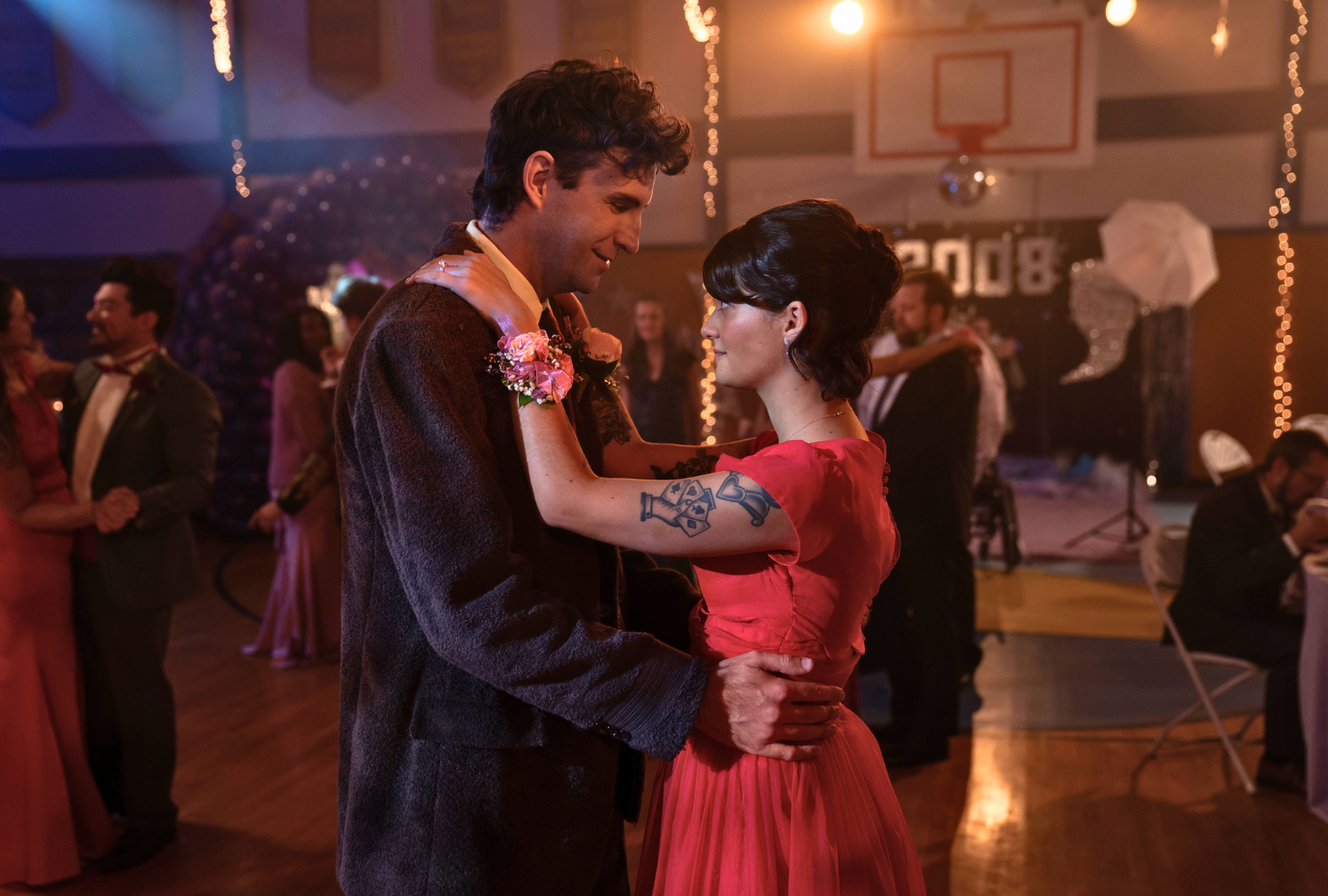
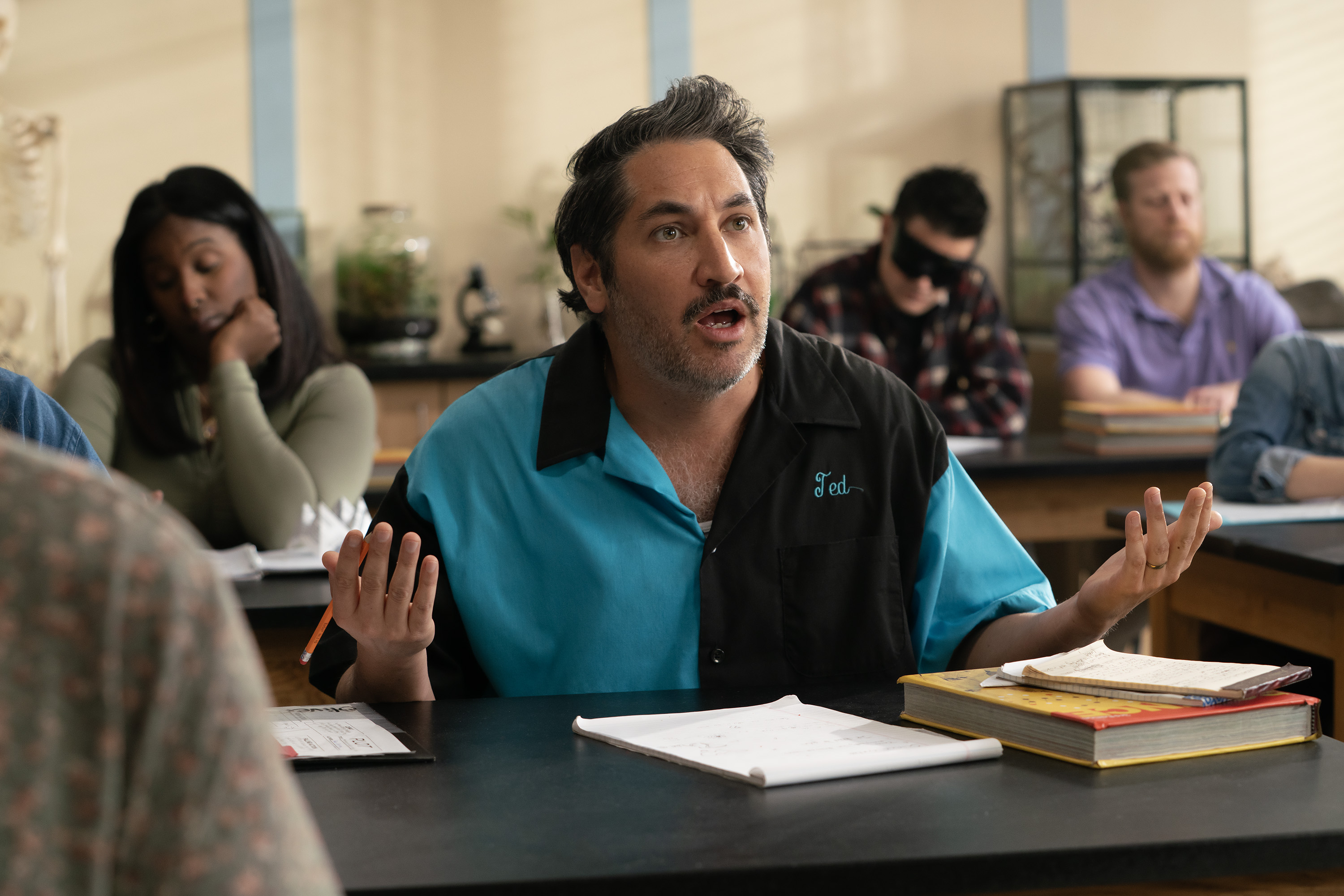
John Reynolds had $74 in the bank when he was cast as Officer Callahan on ‘Stranger Things’. Now he’s starring in Never Change!, Hulu’s newest ensemble comedy about a group of 30-somethings who are forced to return to high school after the tornado that cut their senior year short has retroactively invalidated their diplomas.
The cast is stacked. Sofia Black-D’Elia. Ana Gasteyer. Topher Grace in a hilarious wig. The Bear’s Carmen Christopher. Severance’s Zach Cherry. SNL’s Gary Richardson. After Midnight’s Jo Firestone. And that’s just scratching the surface.
Director Marty Schousboe has worked with cast members Carmen Christopher and Joe Pera on their respective TV specials.
We sat down with Reynolds and Schousboe to talk social anxiety, peer-pressure, and why he’s convinced we never actually outgrow high school.
The transcript has been lightly edited for readability.
Nicole Stawiarski: There are a few things we have in common. I’m thirty-five, and I’m from the Midwest. So this film just was very resonant for me. I love the way you were able to combine nostalgia but keep it so contemporary at the same time, and the way your characters so readily revert to that eighteen-year-old version of themselves. I think somewhere we’re all carrying that version of ourselves with us. What parts of that eighteen-year-old self did you want to revisit or re-examine in the film?
Marty Schousboe: I think Amelia’s perspective of feeling like you want to contribute something. I think when you’re a kid you’re like, “I know I’m gonna be an adult at some point. I know I’m gonna have these responsibilities, what can I do to help”? And then when you’re an adult, you’re so bogged down by all of life, you’ve forgotten that a little bit. And so it was nice to clue into that a little bit again.
John Reynolds: Yeah. I think the thing about my character too, it’s like, I have a lot of social anxiety, and I’m a big hang-xiety person. When I leave a party I’m like, “Well, everyone at that party hates me”. So, I just assume that that’s gotta be how high school would be as well. So, I mean, the thought that you would be faced with everyone because, like, you don’t remember what you did when you were eighteen, or fourteen rather. I think to me, that that would be the scariest part, just the anxiety of having to see everybody and being back in the building. You know?
Nicole Stawiarski: There is this, I think, perception when we’re younger that we’ll “grow out of that” eventually. And I think, you know, adulthood is about realizing that a lot of “high school” in ourselves or in others continues on, kind of forever, and there’s bits and pieces that just are with us forever, so to speak.
John Reynolds: I would argue that that gets worse.
Nicole Stawiarski: It varies from person to person, but, yeah, I think we’ve all seen that play out in different ways.
John Reynolds: Yeah. For sure. For sure.
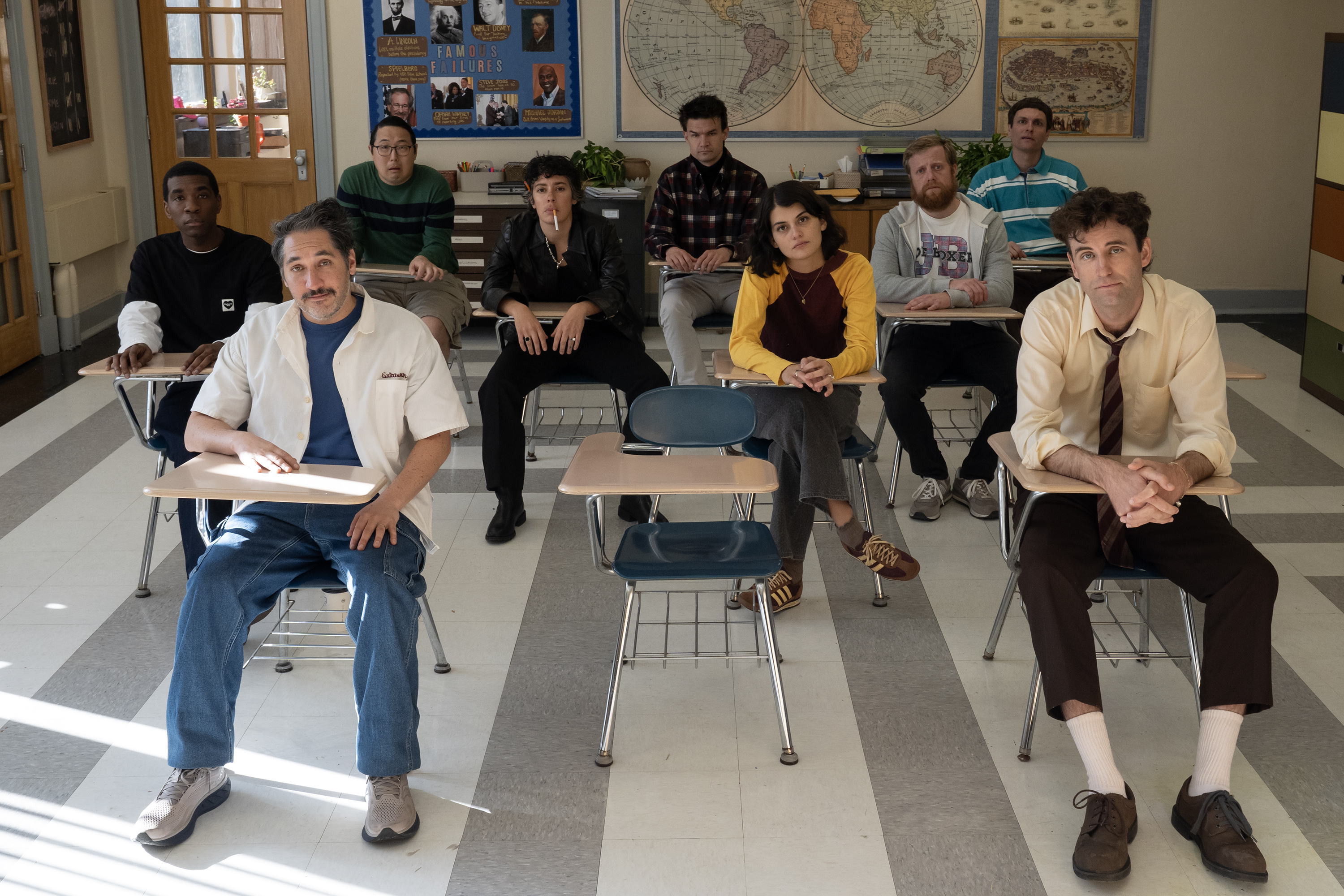
Nicole Stawiarski: I feel like the class of 2008 is one of the last generations that really got to experience an analog version of American public school that we really see romanticized in film. In comparison to 2026, technology and current events can make real life feel kind of surreal or absurd. In the film you have this really hilarious alien abduction at the same time that we’re getting all of these UFO files released from the government. So that comparison is so fun. But it felt like you were reclaiming absurdity and making it fun and lighthearted again. Do you feel there’s a need for that, just in the current climate of finding humor that we can enjoy when so much in the news feels defeating and depressing?
Marty Schousboe: Absolutely. I mean, it felt like both…I felt guilty for, like, getting to make this funny movie while the world was burning around us, and then also it felt like, “Oh, this is what we’re supposed to be doing”. And, like, let’s make this so that people can laugh at this. And it feels a little bit weird to make something that’s light, but it’s also trying to connect a little bit with its sweetness as well.
Nicole Stawiarski: It felt very much like what I needed to watch in this moment, so thank you guys. It was really wonderful.
John Reynolds: Thank you. Yeah. That means a lot. And I think that’s where it came from in a place of wanting to make it too. I think Marty and I, we started developing it at the tail end of COVID, and it was crazy and a time warp, and you know, I don’t think everybody was really at their best state mentally. And I’m talking about Marty and I. Genuinely. So, Marty and I just wanted to make something that was sweet and funny and didn’t have to be sort of like, a commentary or a pressure cooker cynical comedy. We just wanted to just make something sort of timeless in that sense, and make a goofy, sweet thing. Made all the more sweeter when our friends got to be in it.
Nicole Stawiarski: On that note of friends and sweetness, I am also a Second City Conservatory Graduate, and I saw in the writing and in the script just a lot of those improvisational values. You just have this incredible ability to let an entire ensemble shine. Everybody gets their moment to be absurd, but also maintain an emotional grounded-ness and have their backstory and their motivation, and no one’s really just a vehicle for a punchline. It’s very well-rounded in that regard.
John Reynolds: Thank you so much.
Nicole Stawiarski: It’s very generous. So I was curious where that ethos comes from? Was there a writer who was very generous with you as you were starting your acting career? Someone who made you want to pay that kind of style forward to a cast of other actors?
John Reynolds: Yeah. That’s a good question, and something I probably don’t think of enough, but, yeah, Martin and I both are Chicago improv sketch boys and a lot of the cast is too. And I think one of the main tenants I always really loved was an Annoyance Theater thing that was, “the best thing you can do for your scene partner is to take care of yourself”. And I feel like that’s a really nice thing in life too, and I feel like we were able to get a good cast of people that I was comfortable putting them anywhere because I knew they were gonna get theirs and take care of themselves.
And then, just me from the perspective of writing it, I know how funny those people are, so I just wanted to write parts that they could really go off on, and I just wanted them to be the funniest version of themselves. And I think Marty can speak more to just like the environment on set, but that’s also just so really big strength of Marty’s is trying to figure out how to make people comfortable and the funniest that they can be.
CARMEN CHRISTOPHER
Marty Schousboe: And I think we were trying not to make anybody the absolute butt of jokes. Like, we’re trying to treat every character like they were just a real human and letting them all just be people, and they’re gonna feel feelings and feel like whole humans and not just comedy foils.
Nicole Stawiarski: Marty, you guys had mentioned working with everybody before. You’ve directed with Joe Pera and Carmen Christopher and probably others as well. How does that change energy on set? When you’re directing people you’ve worked with quite a bit, how does that change the way you give notes or set up a scene or kind of have things in your head when you know everybody’s strengths so well?
Marty Schousboe: I think well, I can just give people the space to do what they do best. And people feel the trust coming from me, I guess, and it allows them to do what they want. I mean it is just this, like, fun environment. We all like each other. I wanna get the best out of everybody. I want people to have a good time while they’re doing this and [sarcastically] not have any fun. I don’t believe you should have any fun on set. I don’t think making movies should be fun. So they’re supposed to be working hard, and I just make sure that they know that and then they do it.
Nicole Stawiarski: If there was a real mandate to return to high school. Would you suck it up for two weeks, or would you be the one to try and get a class action lawsuit together? Bring it to the Supreme Court or wherever.
John Reynolds: I would absolutely. Yeah. I’d be there, and I would, but I would, to preface, I would text my best friends from high school and be like, “We’re all doing it. You have to go”. Because there’s no way I’m going, and I show up in home room and you’re not there, and I’m like, “Oh my god. I’m so screwed”. But no, it would be, you know that would be again such a wild experience. You have to do it. You have to.
Nicole Stawiarski: Peer pressure works wonders.
John Reynolds: But that’s how I got people in the movie. You have to do it. You can’t. I can’t show up to set and you’re not there.