Pope Leo Xiv’s First Encyclical Is About AI, and He Puts It in the Same Moral Category as Nuclear Weapons.

Pope Leo XIV released his first encyclical today, and its central demand is that artificial intelligence be “disarmed.”‘
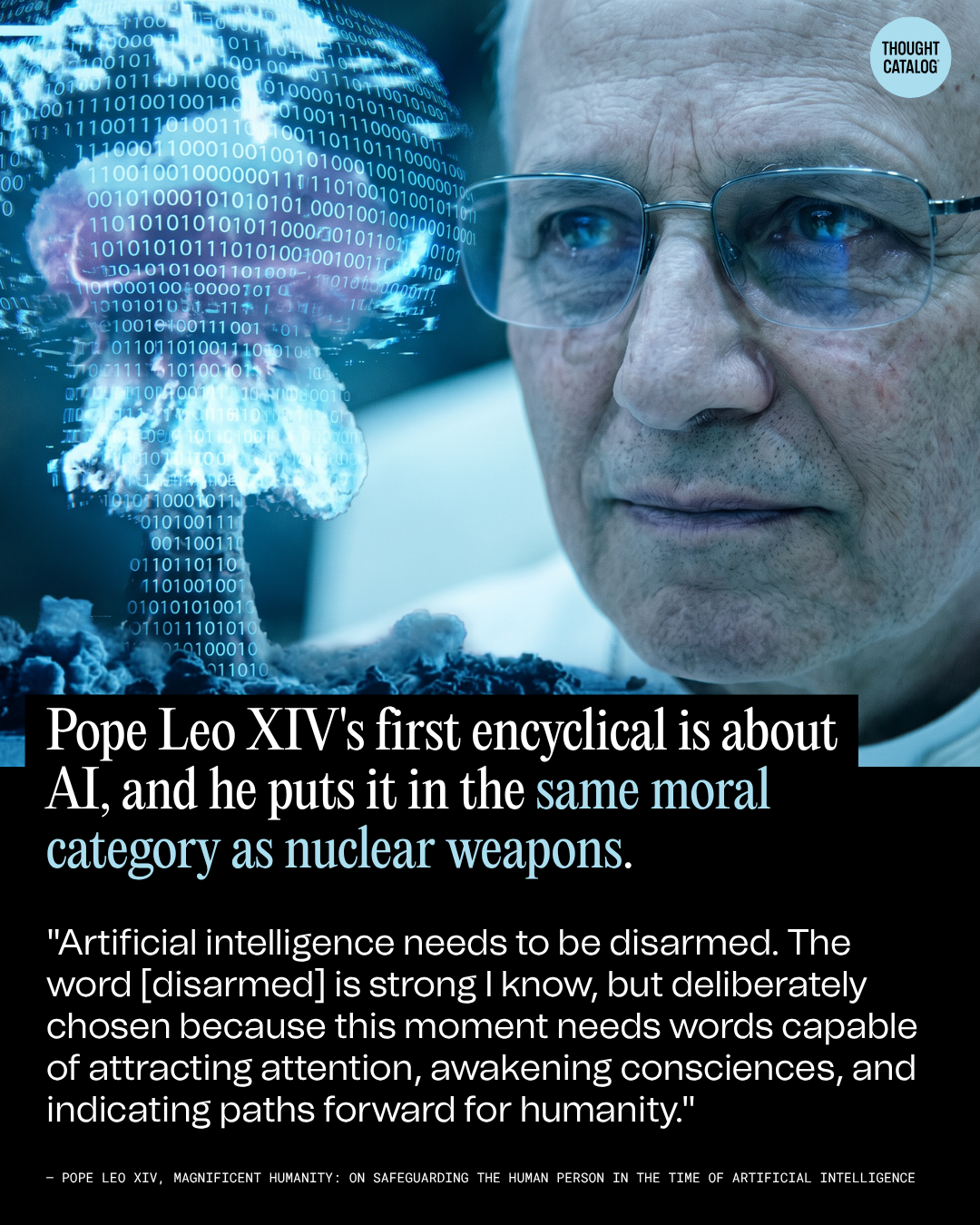
The document is called Magnifica Humanitas (“Magnificent Humanity: On Safeguarding the Human Person in the Time of Artificial Intelligence”). It runs roughly 42,300 words across 184 pages and was signed on May 15, 2026, exactly 135 years after Pope Leo XIII’s Rerum Novarum, the landmark text on the first Industrial Revolution. The parallel is intentional. Leo XIV is framing AI as this century’s equivalent epochal turning point.
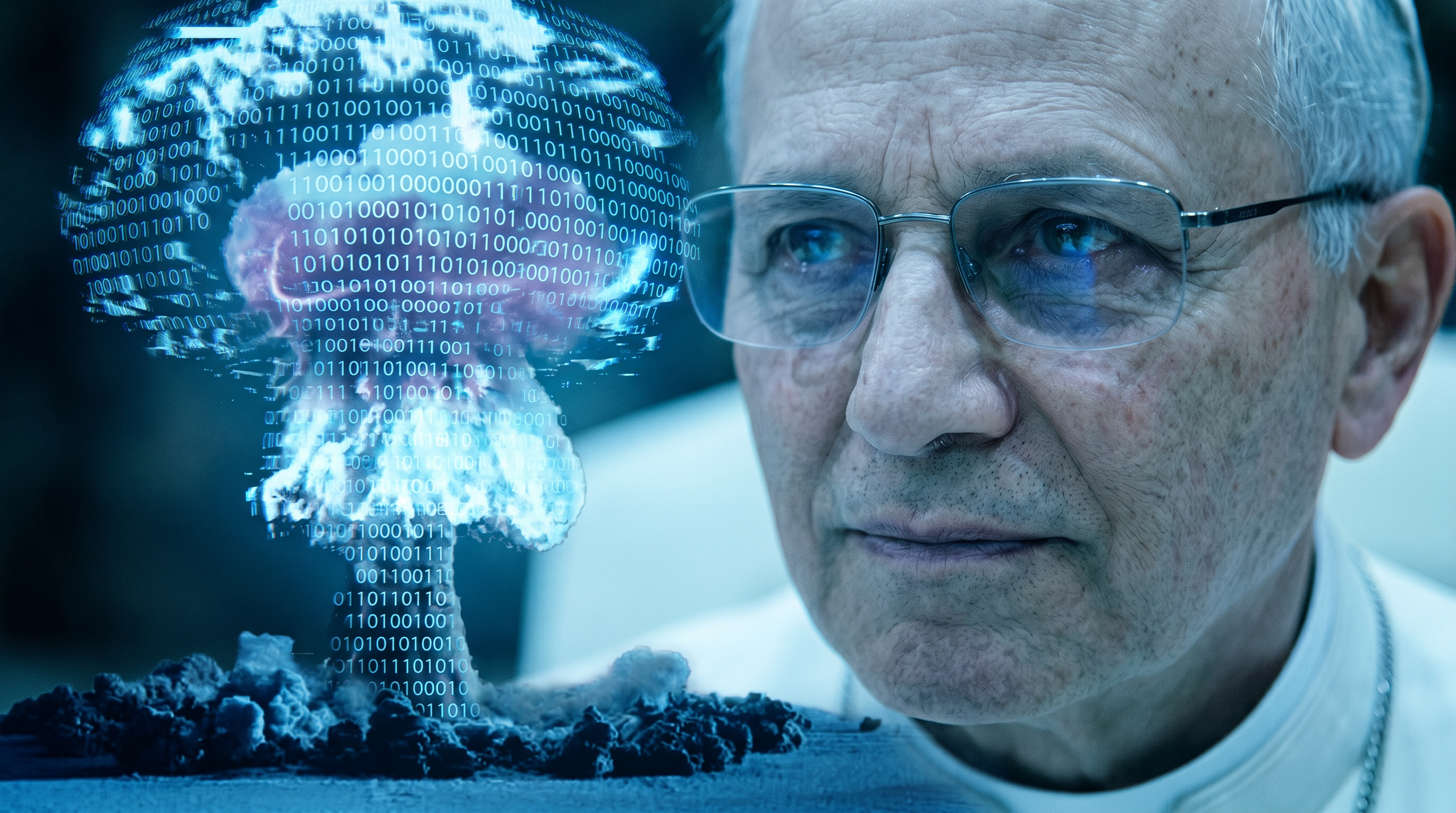
Leo XIV, the first U.S.-born pope (elected in May 2025 as Cardinal Robert Francis Prevost), presented the encyclical live at the Vatican. He said the conviction came from months of listening to scientists, engineers, ethicists, families, and what he called “very troubling voices” on autonomous weapons and biased algorithms. Then he drew the line directly: “Nuclear disarmament remains a service to peace and the dignity of the human family. In a similar sense, artificial intelligence now demands to be ‘disarmed,’ freed from logics that turn it into an instrument of domination, exclusion or death.”
“Disarming AI,” as the encyclical defines it in §110, doesn’t mean halting development. It means breaking the “armed” logic of geopolitical and commercial races for ever-larger models, rejecting the idea that technical power gives anyone the right to govern others, treating data as a common good, and keeping high-stakes decisions under real human control.
On what AI actually is, the document is blunt: “So-called artificial intelligences do not undergo experiences, do not possess a body, do not feel joy or pain, do not mature through relationships and do not know from within what love, work, friendship or responsibility mean. Nor do they have a moral conscience. They may imitate language, behavior and analytical skills, or even simulate empathy and understanding, but they do not understand what they produce.”
On governance, it warns that “AI is not morally neutral; it embodies the values of its designers,” and that “delegating sensitive decisions to algorithms risks excluding the vulnerable under a veneer of neutrality.” It flags concrete domains where this already plays out: hiring, credit, justice, surveillance, and disinformation.
On work, it argues AI “risks de-skilling workers, subjecting them to surveillance, and causing unemployment,” and insists “technology should free human time for higher purposes rather than produce exclusion.”
On warfare, it’s the most direct: “The decision to use lethal force must remain under effective, self-aware and responsible human control. No algorithm can make war morally acceptable.”
The encyclical also warns against a “technocratic paradigm” that concentrates power in private hands, fuels “data colonialism,” and reduces persons to metrics. It calls for international regulation, transparency, digital literacy, and what it names a “civilization of love” to guide the technology.
Leo XIV presented the document alongside AI industry figures, including Anthropic co-founder Christopher Olah, framing the release as a deliberate opening of dialogue between the Church and the people building the technology. The full text is published on the Vatican website.