Sam Levinson Wrote Two Different Women Using The Same Psychological Defense In This Week’s Euphoria. There’s 50 Years Of Research On It.

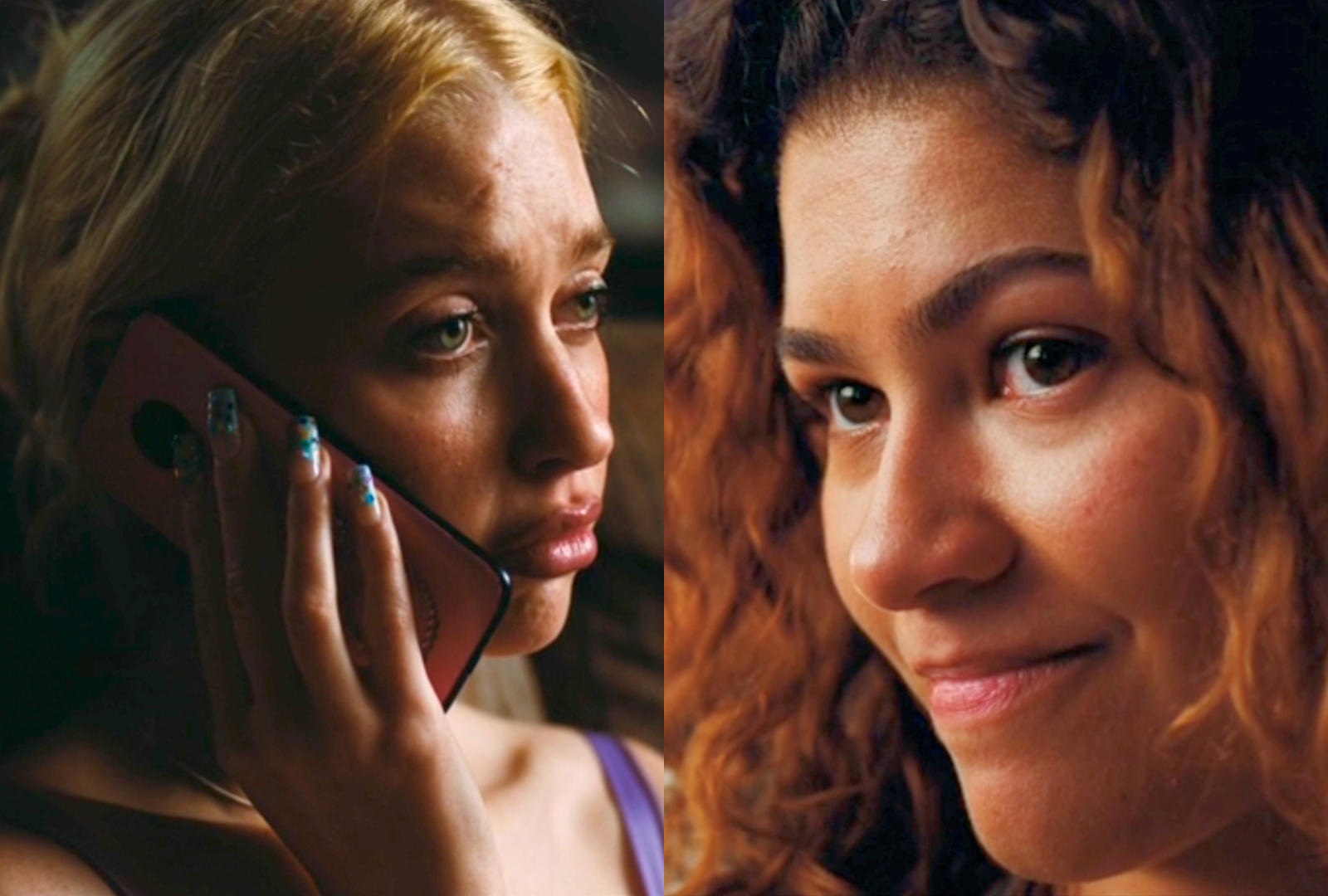
Rue Bennett spent half of last Sunday’s Euphoria in Jules’ apartment proposing marriage and kids. Faye spent the other half doing cocaine while her boyfriend tried to get her pregnant. Both women are in immediate, life-threatening danger. Neither of them acknowledged it once on screen.
Euphoria’s main timeline takes place in 2026, 5 years after the show’s original high-school cast graduated. Most of the major characters are now in their early 20s.
The Rue scene runs about 6 minutes. Her voiceover going into it is the headspace: “Maybe every mistake I’ve made led me to the right place after all.” She walks into Jules’ apartment and tells her she wants to start a life: get married, have kids. “If I had kids, I think it’d be different.” “I just want good old fashioned American problems.”
While Rue is saying all of this, she is also a federal informant. Her boss’ right hand man has told her, the same week as this conversation, that he knows her mother’s last name. He buried her up to her neck in dirt one episode earlier.
She has no job, no housing, and is sleeping on Lexi Howard’s couch.
The Faye scene runs in parallel. Wayne, her boyfriend, is trying to get her pregnant. She’s doing cocaine while it’s happening. Well, it’s not really cocaine, it’s laxatives. Because Rue’s DEA contacts swapped it out. Wayne confronts Faye about the “drugs” because he’s trying to put a baby in her and she’s interfering with it.
Wayne gave her a swastika tattoo. He tells her the only thing she’ll ever be carrying in her belly is some “fair-skinned babies.” She calls the babies her dream.
Rue brought Faye into Laurie’s operation, so she wouldn’t have to mule fentanyl across the border alone. Now she’s begging her to photograph the key to Wayne’s safe so Alamo’s crew won’t kill her. Faye is “madly in love”, but now she’s caught in the middle of a drug war with no easy way out.
Both women spent their respective scenes talking about babies. Neither one acknowledged the elephant in the room.
The technical name for what they’re doing is magical thinking. The mechanism: when present reality is unbearable, the mind constructs a major future life event and uses the imagined future as a substitute for solving the current problem.
The fantasy collects the emotional weight. The present gets none.
Daniel Gilbert’s “Stumbling on Happiness,” published in 2006, is the foundational book on what psychologists call affective forecasting. The term describes the human ability to predict how a future event will make us feel.
The finding across decades of Gilbert’s research at Harvard is that humans are systematically bad at it. We overestimate how much a positive event will help us. We overestimate how much a negative event will hurt us.
Sonja Lyubomirsky’s “The Myths of Happiness,” published in 2013, runs the same research against the specific events Americans bet on: getting married, having children, buying a house, earning a certain amount of money.
Her conclusion is consistent across every chapter. The events deliver less happiness than the people pursuing them expect. The happiness they do deliver fades faster than the people pursuing them assume.
The kid-as-solution variation has the worst track record. Robin Simon at Wake Forest University has published longitudinal data showing American parents report higher rates of depression than non-parents and lower day-to-day happiness during active parenting years.
Daniel Kahneman’s day reconstruction method, which measures moment-to-moment well-being, ranks active childcare below housework in terms of reported pleasure. The findings have to do with the daily experience of parenting. They’re separate from the depth of feeling parents have for their children.
The pattern is sharpest when the motivation for the child is to fix something else. Marriage counselors recognize “let’s have a baby to save the relationship” as a destructive script.
Addiction-recovery literature documents the “savior baby” version. The addict positions the child as the reason to stay sober, which transfers the entire weight of recovery onto someone who didn’t sign up to carry it. Outcomes are worse for both the parent and the child than when the child arrives in a stable life.
The American version of the script is specifically loud. Rue names it directly in the scene. “Good old fashioned American problems.”
Marriage. Kids. Mortgage. A normal life. The cultural mythology promises that following the script delivers the meaning and stability the script depicts. The research is that the script doesn’t deliver what it advertises.
Sam Levinson wrote both scenes into the same hour of television. The structural choice is the point.
The show is making a claim about pattern. Two women in different storylines, both reaching for the same fantasy because the fantasy is what’s available when the present is unsurvivable.
One Black queer woman with an opioid addiction. One white woman with a racist boyfriend. Same defense.
Neither of them is getting what they’re asking for. Rue gets slapped. Faye gets blackmailed by Alamo’s crew to photograph the safe key.
Both end the episode further inside the chaos they spent the hour ignoring. The research says that’s the standard outcome.
The defense is built to delay the reckoning. The reckoning still comes.