Only 7 People on Earth Have Seen a Color Called “Olo,” and No Camera or Printer Can Reproduce It
A team of scientists has done something that sounds impossible: they showed a handful of people a color that doesn’t exist in the physical world, expanding the boundaries of what human eyes can perceive…
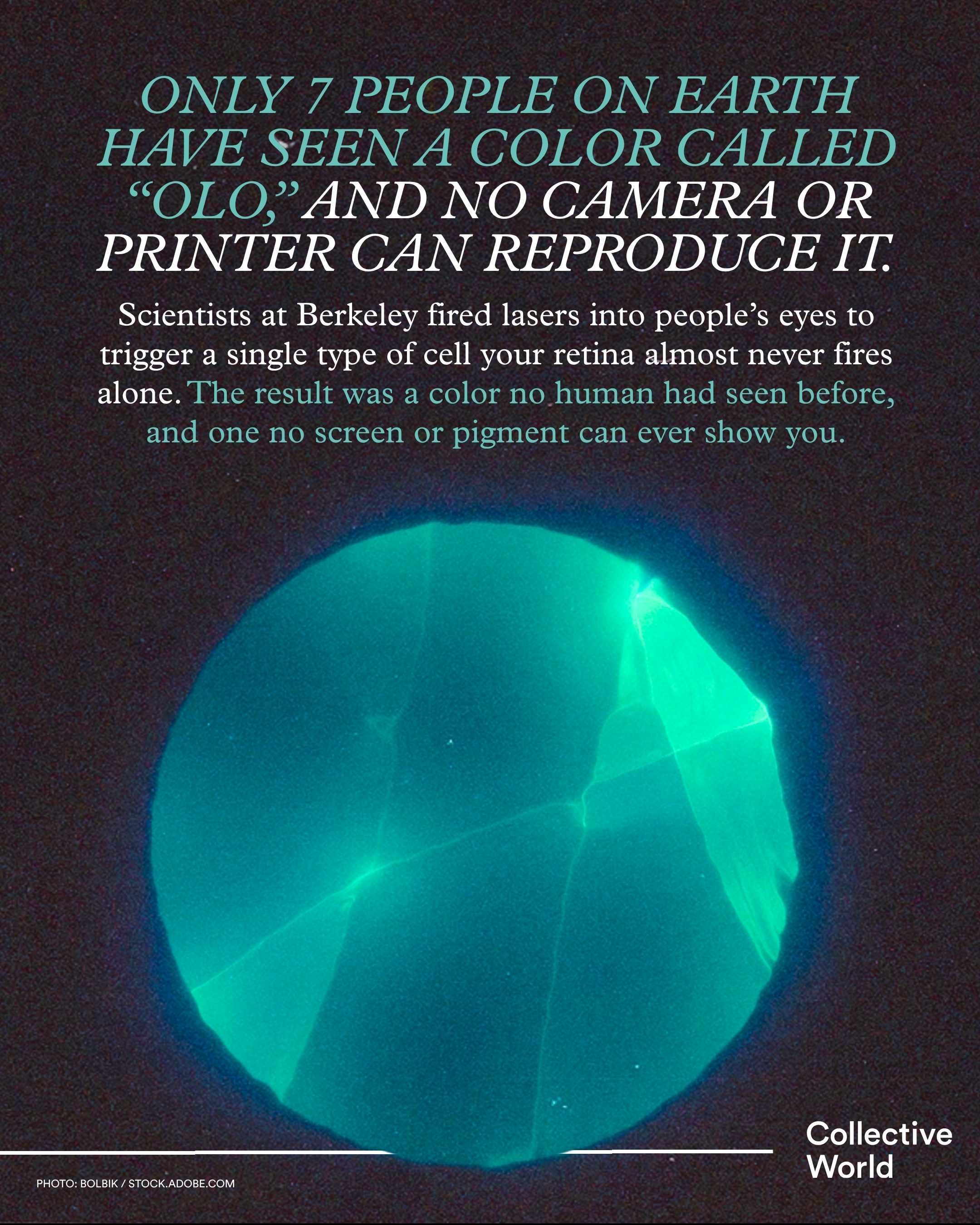
Scientists at Berkeley fired lasers into people’s eyes to trigger a single type of cell the retina almost never fires alone. The result was a color no human had seen before, and one no screen or pigment can ever show you.
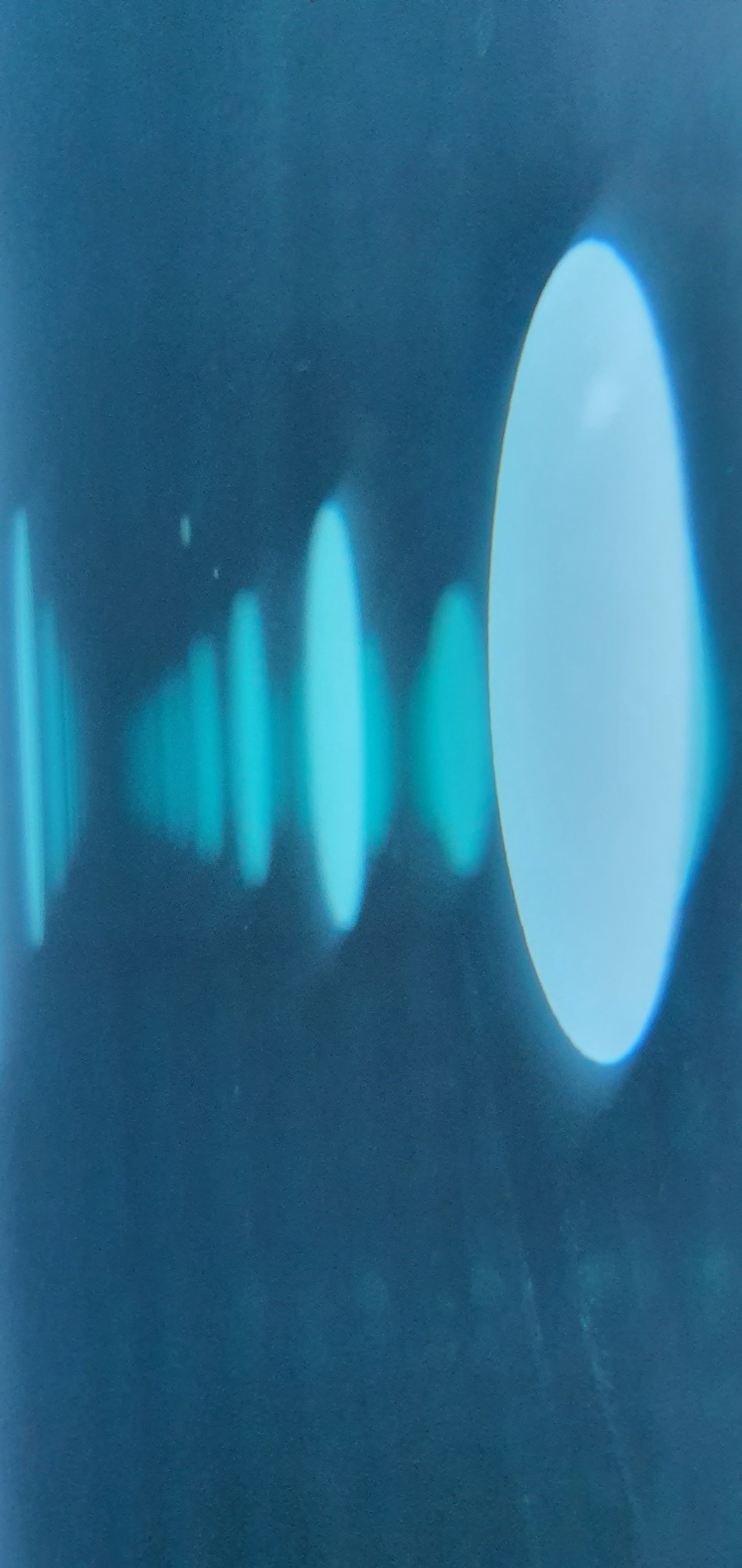
The color is called “olo,” a hyper-saturated teal that exists nowhere in nature. Researchers at U.C. Berkeley generated it with a system they call Oz, which uses adaptive optics to map individual cone cells in the retina and fire microdoses of a 543 nm green laser at just the M-cones, the ones tuned to medium wavelengths. That pattern never happens in natural light, because the M and L cones normally fire together.
Human eyes carry three kinds of cone cells, each tuned to a range of wavelengths that roughly map to red, blue, and green. Every color you’ve ever seen comes from some mix of those three firing at once. Look at grass, sky, or a fire truck, and all three light up together.
Olo skips that. Subjects saw it only as a small patch, about the size of a fingernail held at arm’s length and set off to the side of center. They bit down on a plate to hold their heads still while the system tracked their eyes and delivered thousands of microdoses a second. To prove olo sits outside the normal range of human vision, researchers ran color-matching tests: subjects had to add white light to wash olo out before they could match it to any real color on the spectrum.
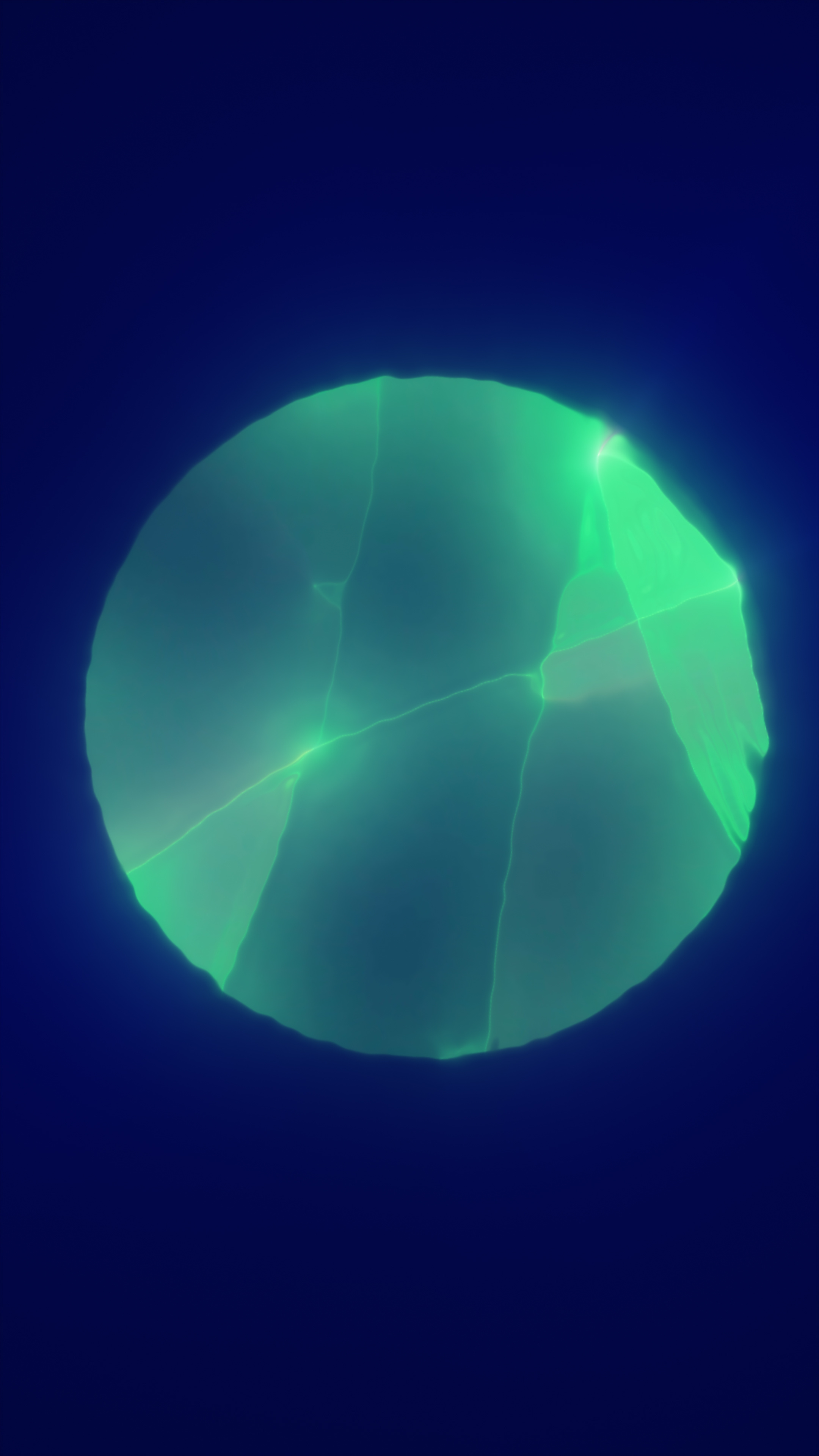
The name comes from the LMS code (0, 1, 0) — L-cones off, M-cones on, S-cones off — written in leetspeak. The work was led by Ren Ng and Austin Roorda at Berkeley and published in Science Advances in April 2025. Not everyone is convinced it counts as a brand-new color: vision scientist Bevil Conway has argued it’s really just the most saturated version of a green we already know, not a new chromatic category.
The team sees future uses in studying color blindness and probing how the brain builds color from raw cone signals in the first place.
Enjoyed this story? Give us a follow on Facebook, and find plenty more on the Thought Catalog website.