Climate Change Felt Like a Faraway Problem in Europe Until Its Great Rivers Started Turning into Sandbars Full of Shipwrecks
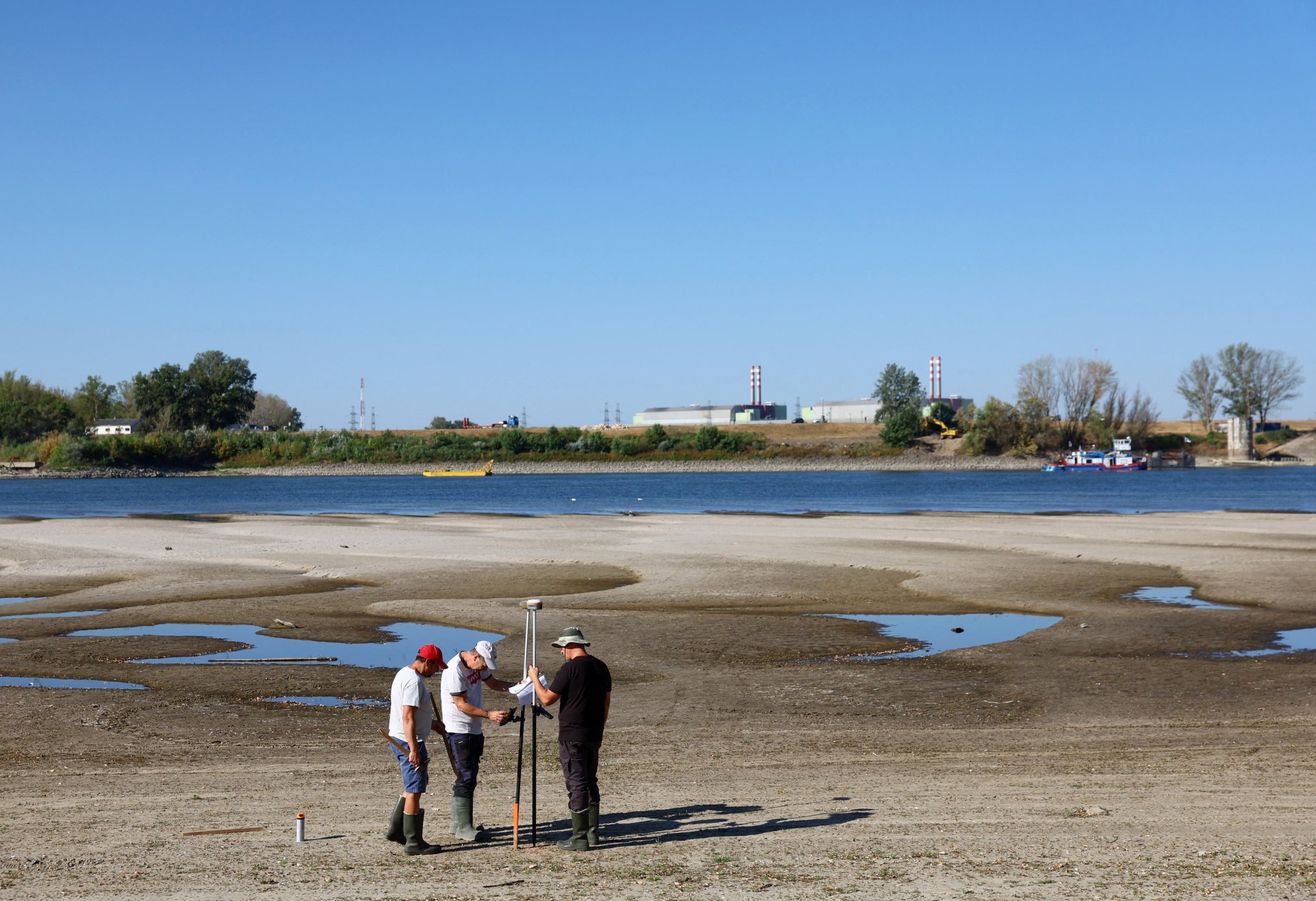
Photo REUTERS/Bernadett Szabo
For years, climate change registered in Europe as something happening elsewhere—to distant coastlines, faraway forests, other people’s summers. This year the continent’s great rivers, the arteries its economy was built around, ran too low to carry the traffic they always had.
The Danube fell to just nine inches deep at one measuring point in Budapest, while parts of the Rhine reached their lowest levels since records began. These rivers carry Europe’s oil, chemicals and crops, but this summer they became too shallow to move fully loaded barges.
Freight traffic on both rivers nearly ground to a halt. The water shortage also forced Romania to shut down a nuclear reactor cooled by the Danube, while Hungary narrowly avoided doing the same. As power supplies tightened, Dacia and Ford agreed to pause production at their Romanian factories.
Across Europe, the drought has reduced major rivers to a fraction of their usual size, according to The New York Times. Italy’s Po River has reached a record summertime low.
The retreating water is also exposing what the rivers had concealed. Nazi ships scuttled near Prahovo, Serbia, in 1944 have resurfaced, along with a 1930s cargo vessel in Croatia. On a dry stretch of the Danube in Bulgaria, bones emerged that local experts believe most likely belonged to an ancient mammoth.
The discoveries are reminders of how long Europe has organized itself around these waterways. German industry clustered where the Rhine meets the Ruhr, helping power the country’s postwar economic boom. Rotterdam, near the river’s mouth in the Netherlands, grew into Europe’s busiest port. The Danube still carries Ukrainian crops toward export markets and supplies toward the country’s military.
Europe’s economic map was built around the assumption that these rivers would provide cheap, reliable transportation indefinitely. Rebuilding that system around waterways that can no longer be trusted could take decades and cost enormously. The places that gained the most from river trade—including the German Rhineland and Rotterdam—may now have the most to lose.
Thank you for reading. You can find Thought Catalog on Facebook, and read more over on our website.