
South Carolina Bans Tattoo Shops Within 1,000 Feet of Any Church, School, or Playground, a Rule That Wipes Out Most of the State
South Carolina is one of the most restrictive states in the country for tattoo artists. Beyond barring shops from opening within 1,000 feet of any church, school, or playground, the state also makes tattooing anyone’s head, face, or neck a crime.
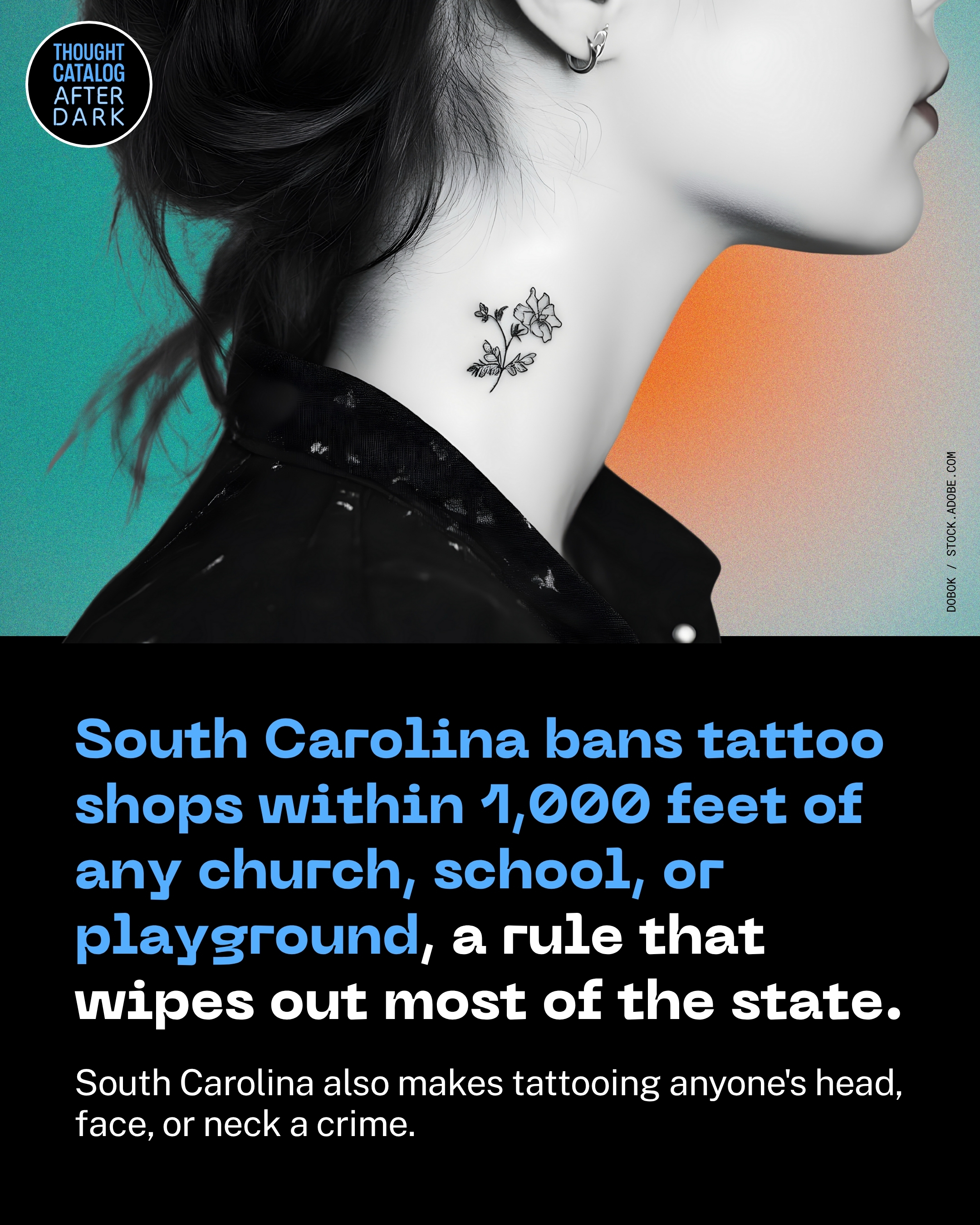
That head-face-neck ban is treated as a misdemeanor, and a violation can bring a fine of up to $2,500 and as much as a year in jail.
Now those rules are being challenged in court. Tiny Zaps, a New York-based tattoo company, sued state officials on July 17 alongside Joshua and Stephanie McDonald, a married couple from South Carolina. Their federal complaint argues that both the location rule and the head-face-neck ban reflect “tattooing’s status as disfavored speech in South Carolina.”
The 1,000-foot buffer leaves almost nowhere to legally operate. The Pacific Legal Foundation, which represents the plaintiffs, says the rule “leaves few viable locations in a state with more than 7,000 churches.”
According to the complaint, Tiny Zaps had been in talks to open a pop-up shop at a boutique hotel in Charleston until the restrictions stalled the plans. The state puts no comparable limits on piercings.
“Whether artwork appears on canvas, paper or skin, the Constitution protects both the artist’s right to create it and the customer’s right to receive it,” the complaint said.
The suit names State Public Health Director Dr. Brannon Traxler and Attorney General Alan Wilson as defendants, and asks the court to find that the rules violate the First and Fourteenth Amendments and to block their enforcement.
“South Carolina cannot treat tattooing as a second-class expression based on stigma or discomfort,” said Caleb Trotter, a senior attorney at the Pacific Legal Foundation.
Thanks for reading. Follow Thought Catalog on Facebook for more stories like this, or explore our website.