Elon Musk Says SpaceX Will Be Worth More Than the Entire Earth Because Musk Will Harvest the Sun
The number he’s chasing is Earth’s entire GDP, roughly $100 trillion. His pitch to investors: capture a sliver of the Sun’s energy from space, and one company clears the whole planet’s economy.
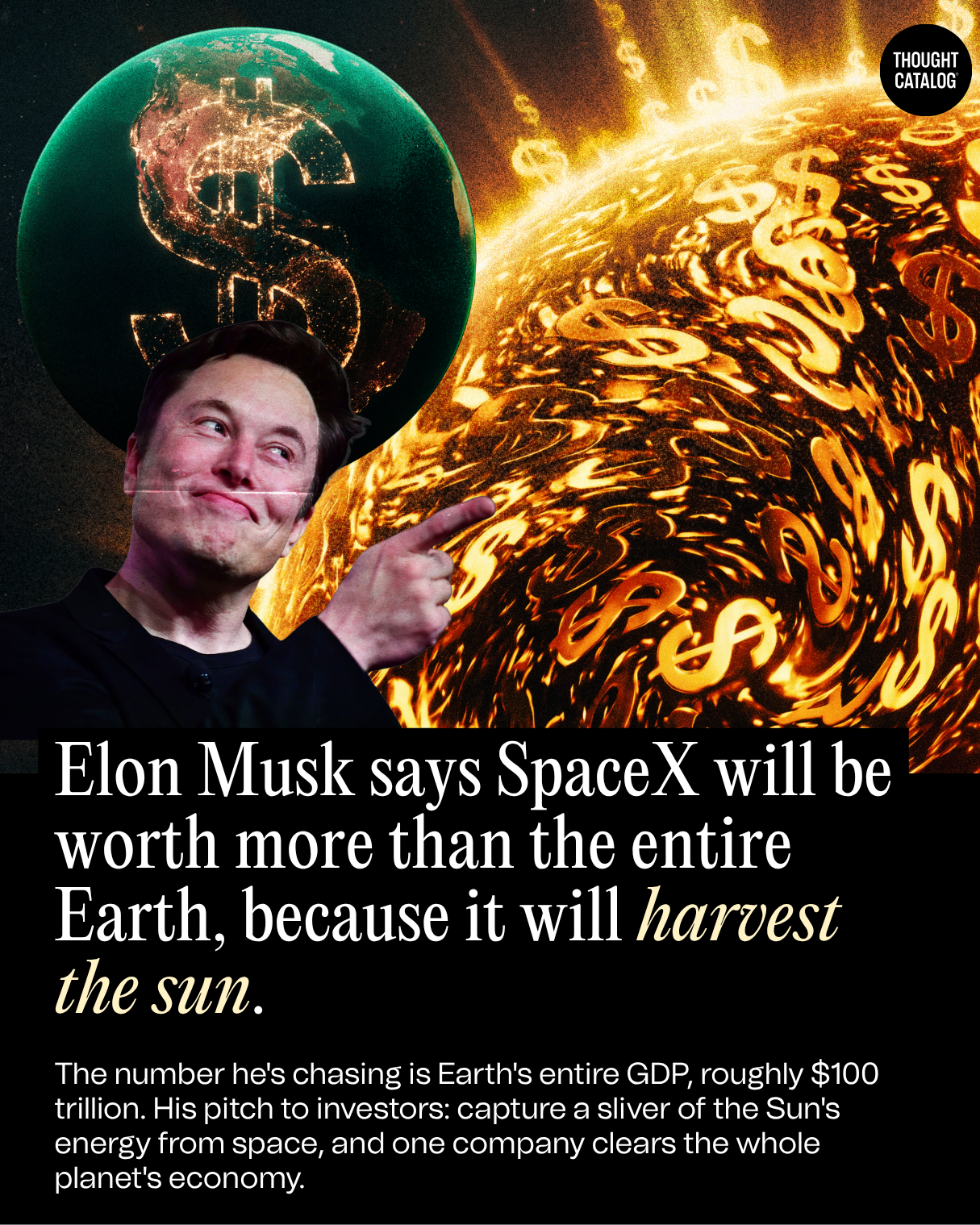
Musk floated the claim in a tweet defending SpaceX’s recent AI compute deal with Anthropic, after a supporter argued the deal handed too much money to a rival. His reply: “SpaceX will be worth more than the rest of Earth if we accomplish our goals.”
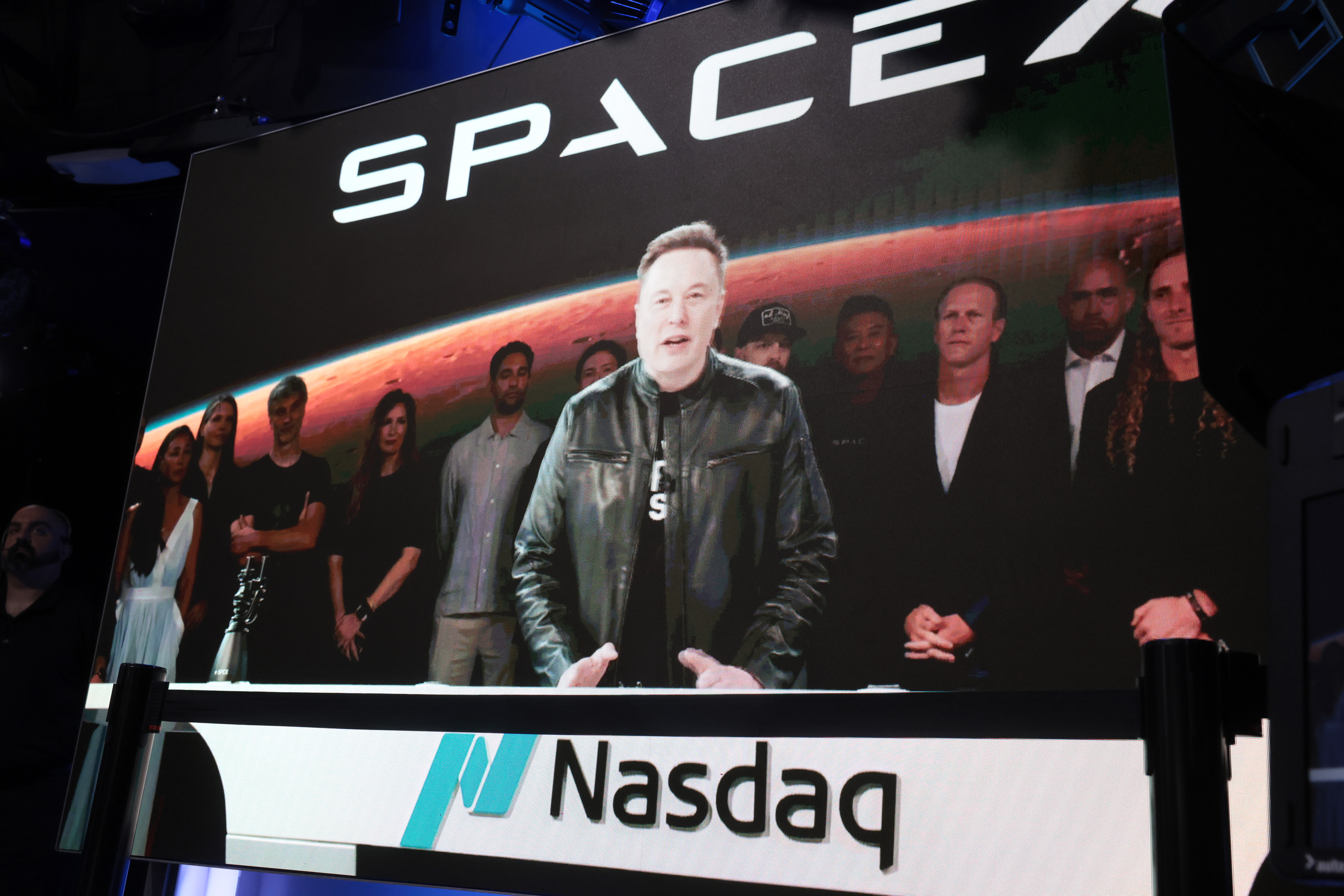
The defense has teeth. Anthropic is paying SpaceX $1.25 billion a month through 2029 for full access to the Colossus 1 data center in Memphis (300-plus megawatts, hundreds of thousands of NVIDIA GPUs), and Google signed a similar deal at $920 million a month. Combined, SpaceX’s AI compute contracts are reportedly running at a $26 billion-plus annual rate, and Anthropic has already expressed interest in SpaceX building multiple gigawatts of compute capacity in space.
The logic runs through the Kardashev scale, a measure of how much energy a civilization can channel. Musk figures space-based solar power could tap roughly 100,000 times more energy than Earth while using less than a millionth of what the Sun puts out, enough, he says, to eclipse global GDP.

The energy math isn’t crazy on its face. Earth currently runs on about 2 x 10¹³ watts of average power. Multiply that by 100,000 and you’re at 2 x 10¹⁸ watts, which is roughly one two-hundred-millionth of the Sun’s total output of 3.8 x 10²⁶ watts. No Dyson sphere required, just a swarm of orbital solar satellites beaming power down, assuming launch costs keep collapsing. Concepts already on the drawing board target single installations delivering 2 gigawatts continuously to Earth, one array doing the work of several ground plants with almost no weather or night losses.
The economic leap follows the same logic. Every previous jump in cheap energy (coal, then oil and electricity) produced a non-linear jump in GDP per person, because new energy regimes don’t just scale existing activity, they unlock industries that were previously uneconomic (synthetic fuels, desalination at scale, orbital manufacturing, AI clusters that couldn’t be powered before). Stack a 100,000x energy unlock on top of AI removing cognitive bottlenecks and robots like Optimus removing labor bottlenecks, and the ceiling on annual output stops being set by physics.
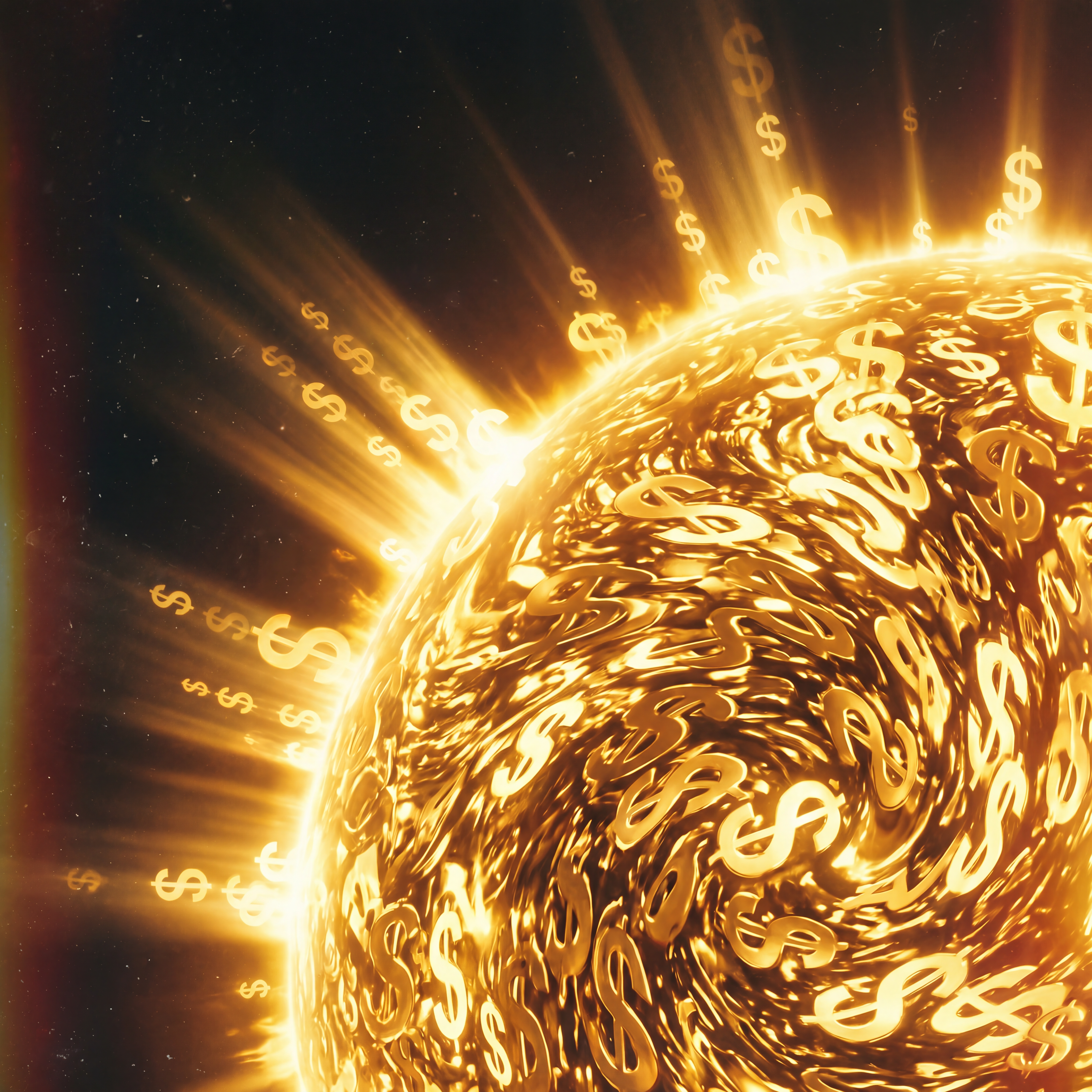
That’s why the orbital compute angle matters: AI training is already slamming into terrestrial power and cooling walls, and space offers near-constant sunlight and passive vacuum cooling. The bet is that SpaceX owns the infrastructure layer (Starship for cost-to-orbit, Starlink for comms, orbital compute deals like the Anthropic one) that any of that gets built on.
He’s made versions of this pitch before. In January he said “space-based industries will vastly exceed the value of all of Earth,” and he’s claimed Tesla’s Optimus robot will raise “Earth GDP by an order of magnitude.”

The company those promises are attached to lost $5 billion last year. SpaceX shares rallied after a blockbuster IPO last month, then slid, with investors still wary of a multitrillion-dollar valuation. And on July 10, China recovered the first stage of a Long March 10B rocket via net capture on a ship, its first orbital-class reusable booster landing, closing the reusability gap that made SpaceX’s economics work in the first place.
Thanks for spending time with Thought Catalog. Connect with us on Facebook and browse the rest of our website.