Where the Danger Grows, So Too Does the Solution: A.I. Just Created Novel Viruses Never Seen Before in Nature

Where the danger grows, so too does the solution: An AI wrote genetic recipes for viruses never before found in nature. Sixteen came alive inside bacteria, and some reproduced faster than the natural virus they were modeled on. The same technology could create lifesaving medicines or help build a pandemic, but the rules meant to contain it haven’t caught up.
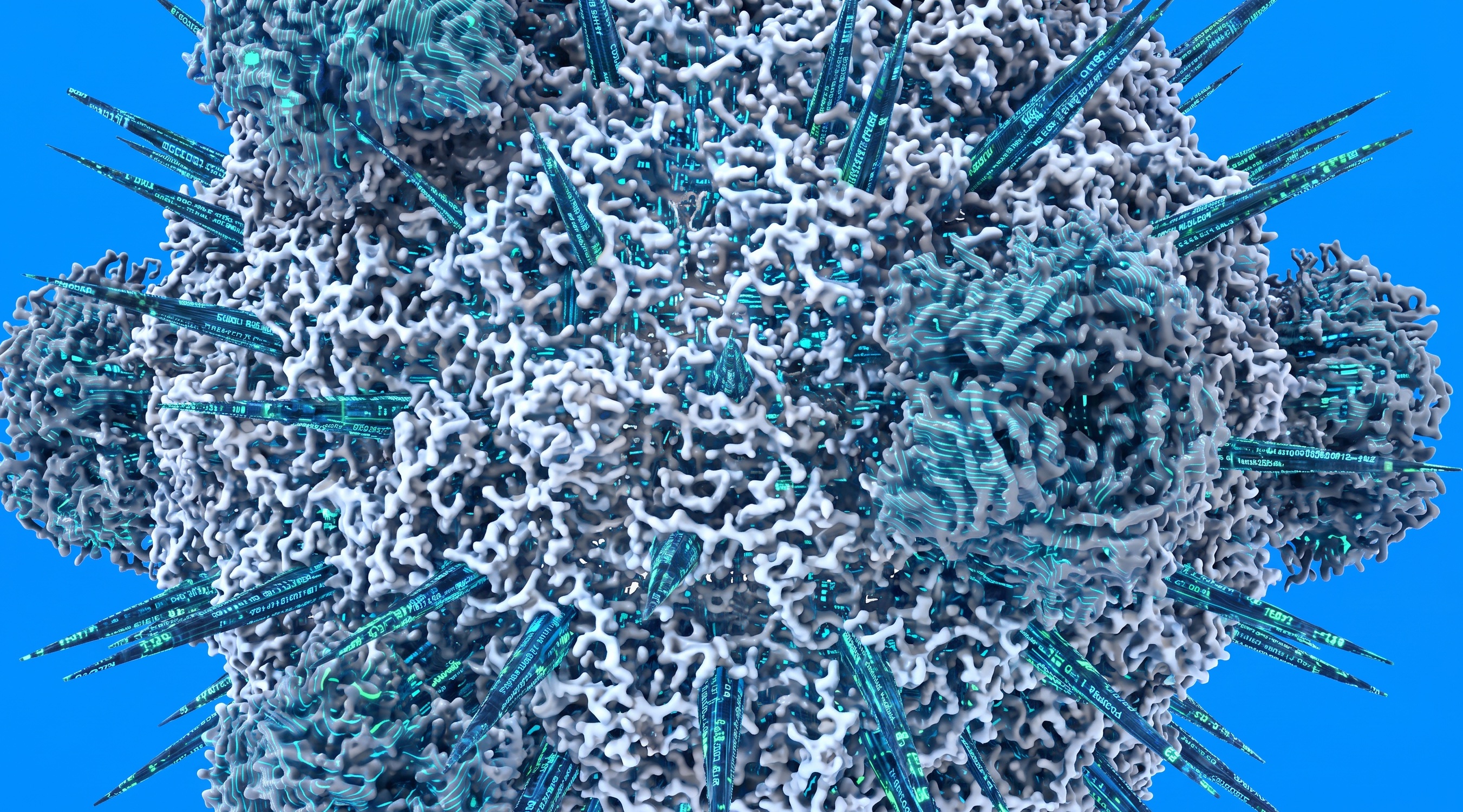
The 16 viable viruses all resemble Phi X-174, a bacteriophage that infects only E. coli and has been studied for nearly a century, meaning none can threaten humans. That safety was deliberate. Researchers at Stanford and the Arc Institute excluded human, animal, plant, and fungal viruses from the training data. “We just wanted to be extra careful,” said Brian Hie, a Stanford computational biologist and co-author of the study, published Thursday in Science.
The model, called Evo, learned by scanning roughly nine trillion nucleotides across millions of species. Researchers then trained it further on Phi X-174’s 11 genes and about 15,000 closely related viruses. Evo generated 700,000 possible new versions, and the team synthesized the DNA of 285.
Researchers inserted those sequences into bacteria and watched for the clear spots that appear when viruses multiply. Sixteen produced viable viruses, some of which were more resilient and reproduced faster than the natural original.
The medical potential is real. Doctors already use modified viruses to carry therapeutic genes into cells, and AI could help design more effective versions. The danger is the mirror image.
“You could say, ‘Hey, genomic language model, make me an influenza genome that is modified to be more transmissible or to be more lethal,'” said Moritz Hanke of the Johns Hopkins Center for Health Security.
A new NIH policy restricts experiments that make biological agents more harmful, but computer-based work such as generating viral
Thanks for spending time with Thought Catalog. Connect with us on Facebook and browse the rest of our website.